
A focus group is a moderated discussion with 5 to 8 participants, designed to surface how people reason about a product, brand, or decision in their own words. Praxia Insights runs focus groups end to end: screening and recruiting participants, writing the discussion guide, moderating virtual groups, analyzing the transcripts, and delivering findings your team can act on.
Most teams don't come to us because they want a focus group. They come because a decision is stuck: the survey data didn’t explain the why behind customer behavior; the team disagrees about what clients actually value; a launch is coming and nobody wants to bet the roadmap on assumptions.
Focus groups are the right tool when you need to hear the reasoning, not just the result. Watching eight of your buyers argue about your pricing tells you things no dashboard will.
Focus Group Services

When a Focus Group Is the Right Method
Focus groups earn their cost in specific situations:
You need language, not numbers. Messaging, positioning, and naming work all depend on the exact words your customers use. Groups surface that vocabulary.
The topic benefits from interaction. Participants build on each other, disagree, and surface objections they wouldn't volunteer alone.
You're exploring, not confirming. Early-stage concept work, unclear problem definition, or a market you don't understand yet.
You need stakeholders to see it. A recorded group where three customers independently name the same frustration moves an executive team faster than a slide.
They're the wrong tool when you need statistical confidence, when the topic is sensitive enough that people won't speak candidly in a group, or when you need individual decision journeys mapped in detail. In-depth interviews or surveys serve those better, and we'll tell you if that's what your question actually needs.
What’s Included:
We define what the groups need to answer, then build a guide that gets there. Sequencing matters more than question count: the wrong order produces groupthink, and the wrong opening produces polite non-answers.
1. Study design and discussion guide
We write the screener, source participants, verify they qualify, and manage scheduling and reminders. Recruiting is where most focus group projects fail, and it's the part we're strongest at.
2. Screening and recruitment
3. Moderation
Trained facilitation, virtual or in person. A good moderator manages the dominant talker, draws out the quiet participant, and follows the thread that wasn't in the guide.
We handle participant incentives through Tremendous, including digital gift cards across US and international recipients. You don't touch payment logistics.
4. Incentive administration
Transcripts coded for themes, disagreements and outliers flagged rather than smoothed over, and findings delivered as an executive report, a slide deck, or a working session with your team.
5. Analysis and reporting
Recruiting Participants Others Can't Reach
Recruitment quality determines whether a focus group is worth running. We recruit across the US and globally, including audiences that panel providers routinely fail to deliver:
Specialty roles, like Radiologists for interviews on imaging technology workflows
HR leaders responsible for menopause and women's health benefit programs
SaaS decision-makers evaluating vendor websites and sales funnels
High-level executives, from VPs to C-Suite and Presidents
Niche consumer segments in yachting, luxury jewelry, and high-end athleisure
If your audience is hard to reach, that's usually a reason to talk to us.
Previous Project Examples

A NIH-funded study examining neuropsychological predictors of adaptation after trauma.

A five-year randomized control trial (RCT), funded by the U.S. Department of Ed, to study individualized math instruction.
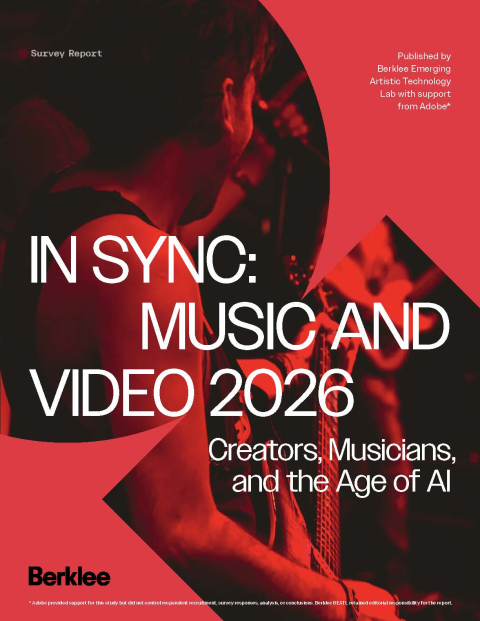
Led a national survey study in partnership with Berklee BEATL & Adobe to study AI use in the music industry.
How Focus Groups Work at Praxia Insights
Scope & Planning
You receive a written scope of work with deliverables, timeline, and budget before any work starts.
Recruit & Schedule
We screen, recruit, confirm, and send reminders. No-shows are replaced with new participants.
Facilitate Groups
Groups are moderated and recorded. Video recordings and transcripts are provided after calls.
Analysis & Reporting
Transcripts coded, findings synthesized, delivered in the format your team will actually use.
We share directional insight as it emerges rather than holding everything for a final report. Teams shouldn't wait six weeks to learn something we heard in the first session.
Frequently Asked Questions
-
Five to eight is the working standard. Below five, one dominant participant can steer the whole session. Above eight, quieter participants stop contributing and the moderator loses the ability to follow individual threads.
-
Most studies run three to six groups. The guiding principle is thematic saturation: you stop when new groups stop producing new themes. If you're comparing distinct segments, plan at least two groups per segment so you can separate a segment pattern from a single group's dynamic.
-
Typically four to eight weeks from kickoff to final report, driven mostly by how hard the audience is to recruit. Niche professional audiences take longer than general consumers.
-
Cost depends on the number of groups, how difficult the audience is to recruit, incentive levels, and the depth of analysis and deliverables you need. We provide a fixed-scope quote after an initial consultation, so there are no hourly surprises.
-
A blend of recruiting platforms, professional networks, and direct outreach, screened against your criteria. We verify qualification rather than relying on self-reported panel data, which is where most recruitment quality problems originate.
-
We do, through Tremendous, including digital gift cards for US and international participants. Incentive amounts are set during scoping based on your audience and time commitment.
-
Yes. Clients regularly observe virtual groups, and we can set up a separate observer channel so your team can share reactions without participants seeing them.
-
Typically an executive report or slide deck with findings and recommendations, supported by coded themes and representative participant quotes. Recordings and transcripts are available on request. Some teams prefer a working session instead of a written report, and we'll do that.
-
Focus groups surface how people reason collectively: what they agree on, what they argue about, and what language they use. Interviews go deeper on individual experience and work better for sensitive topics or detailed decision journeys. Many studies use both.
Our Expertise
More than 60 studies designed, including case study, quasi-experimental, RCT, and mixed-method designs
Hundreds of focus groups and in-depth interviews conducted
More than $4 million in grant-funded research managed
Clients spanning Fortune 500 companies, startups, nonprofits, universities, and federally funded programs
Our researchers hold doctorates in educational neuroscience, psychology, and related fields
Ready to hear what your customers actually think?
Tell us about your project and we'll advise on whether focus groups are the right method, what scope makes sense, and what it would take to run it well.