UX Research Consultancy
UX research is the study of how people actually use a product, watched directly instead of guessed at. Praxia Insights is a UX research consultancy that plans studies, recruits and screens real users, runs moderated and unmoderated sessions, and delivers prioritized findings your product and design teams can act on.
Product teams rarely lack opinions about what users want. They lack evidence. Two people are certain the onboarding is the problem, someone else is certain it’s pricing, and the roadmap gets decided by whoever argues hardest.
UX research replaces that argument with observation. You watch real users attempt the thing, and the reason they fail stops being a theory.
We run the whole study for you, from defining what the research needs to answer, through recruiting users who match your actual audience, moderating the sessions, and delivering findings ranked by severity so your team knows what to fix first.
Discuss your UX research needs
When You Need UX Research
UX research pays for itself when the cost of building the wrong thing is higher than the cost of finding out. That usually looks like one of these:
Before you build: you have a concept or prototype and need to know whether people understand it before engineering time goes in.
Before a redesign: you're about to change something that works for some people, and you need to know who and why.
When a metric is bad: conversion, activation, or retention is underperforming and the analytics tell you where users drop off but not why.
When the team disagrees: several plausible explanations exist and no amount of internal debate will settle it.
Before a launch: you need to catch the problems that will generate support tickets on day one.
It's the wrong investment when you already know what's broken and just haven't fixed it, or when the real question is about market demand instead of usability. We'll tell you if that's what we think you have.
Areas of Expertise
Usability Testing
Moderated or unmoderated sessions where real users attempt real tasks in your product. We identify where people get stuck, why they get stuck, and how severe each issue is, so your team knows which problems to fix first.
Customer Journey Mapping
Research-grounded maps of how users move from first awareness through onboarding, use, and renewal, including the difficulties and frustrations that never show up in product analytics.
User Interviews
In-depth conversations that show you how users think about the problem your product solves, what they tried before, and what language they use to describe it. Interviews go deeper than testing on motivation, context, and decision-making.
Card Sorting and Information Architecture
Structured exercises that reveal how your users expect content and features to be organized. Their expectations are often meaningfully different from how your org chart organizes them.
Prototype and Concept Testing
Testing before you build. Clickable prototypes, wireframes, and even sketches can be tested with users, so you can find out a concept doesn’t land while changing it is still cheap.
Survey-Based UX Research
Quantitative measurement of usability, satisfaction, and task success at a scale that qualitative sessions can’t reach, designed so you can actually interpret what the numbers mean.
Project Examples

A NIH-funded study examining neuropsychological predictors of adaptation after trauma.

A five-year randomized control trial (RCT), funded by the U.S. Department of Ed, to study individualized math instruction.
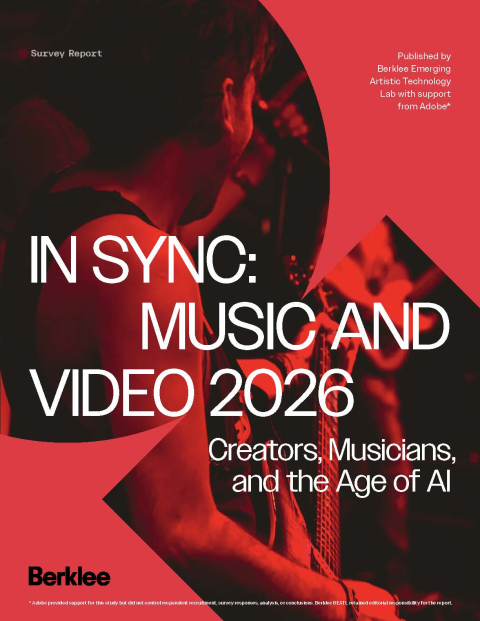
Led a national survey study in partnership with Berklee BEATL & Adobe to study AI use in the music industry.
How We Work
1. Initial consultation and plan
We meet to discuss your specific needs and confirm this is the right approach for the decision you're facing.
2. Project scoping and budget
You receive a custom scope of work with tasks, due dates, and budget before any work begins. Fixed scope, no hourly surprises.
3. Project execution
You receive updates on progress throughout, including recruitment status and fielding milestones.
4. A true partnership approach
We share insights with you as they come up throughout the project, so your team can start acting on what we learn long before the final report is finished.
5. Project completion
We deliver final insights in the format your team will actually use, whether that's a written report, an executive presentation, or a working session.
Frequently Asked Questions
-
UX research studies how people interact with a product: whether they can complete tasks, where they get confused, and what makes them abandon a flow. Market research studies the market around the product: who the buyers are, how large the opportunity is, what they’ll pay, and how you’re positioned against competitors. Many projects need both, and we run both.
-
For finding usability problems, five to eight participants per distinct user group will show you the large majority of issues, and additional participants mostly repeat what you've already seen. If you're comparing two designs or measuring task success rates quantitatively, you need considerably more. We size the study to what you need the results to do.
-
Moderated sessions let a researcher probe when something unexpected happens, which matters most for early-stage concepts and complex workflows. Unmoderated testing is faster and cheaper and works well for validating specific flows in a product that already exists. Many studies use both.
-
Yes. We write the screener, source participants, check that each one genuinely qualifies, handle scheduling and reminders, and administer incentives. If you'd rather test with your own users, we can work from your customer list instead.
-
Most studies run three to six weeks from kickoff to final deliverable. The main variable is recruitment: general consumer audiences move quickly, while specialized professional users take longer to find and schedule.
-
Cost depends on the number of sessions, how hard your users are to recruit, participant incentives, whether sessions are moderated, and the depth of analysis and deliverables you need. We provide a fixed-scope quote after an initial consultation.
-
Typically a findings report with issues ranked by severity, supported by session clips or representative quotes, plus specific recommendations. Some teams prefer a working session where we walk through findings live and prioritize fixes together. Recordings and transcripts are available on request.
-
Yes, and it's usually the best time to test. Clickable prototypes, static wireframes, and even paper sketches produce useful findings. Testing early is dramatically cheaper than finding the flaw after engineering has built it.
-
Both. Remote sessions are standard for most software research and let you reach users regardless of location. In-person is worth the cost when users need to handle physical hardware or when environment and context are part of what you're studying.
-
Yes. Many clients have designers and product managers in house and bring us in for the research itself, so their team stays focused on building. We can also work as an embedded research partner across multiple studies.
Our Experience
More than 60 studies designed, including case study, quasi-experimental, RCT, and mixed-method designs
More than 100 focus groups and in-depth interviews conducted
More than $4 million in grant-funded research managed
Clients spanning Fortune 500 companies, startups, nonprofits, universities, and federally funded programs
Our researchers hold doctorates in educational neuroscience, psychology, and related fields
Ready to find out what your users actually do?
Tell us what you’re trying to learn. We’ll advise on the right method, what scope makes sense, and what it would take to run it well.