Market Validation Research
Market validation research tests whether people actually want what you're planning to build, and whether they want it enough to pay for it. Praxia Insights runs validation studies that combine customer interviews, surveys, competitive research, and pricing work, so you find out whether the demand is real while changing course is still inexpensive.
Almost every business that fails does so because it built something people didn't want badly enough to pay for. The idea usually sounded good, the team believed in it, and somebody in an early conversation said they'd definitely buy it.
Validation research is how you find out whether that early enthusiasm holds up when you talk to people who have no reason to be polite to you. We test whether the problem is real, whether it's painful enough that people are already working around it, and what they'd have to give up to switch to you.
The findings are useful either way. When the demand is there, you get evidence you can take to a board or an investor. When it isn't, you've saved yourself the money and the year.
Discuss your validation research
What Validation Research Answers
Is the problem real: do people actually have this problem, and do they think about it often enough to go looking for a solution?
Is it urgent: are they already spending time, money, or effort working around it today?
Who has it worst: which group feels the problem sharply enough to be your first customers?
What are they using now: what does the alternative look like, including doing nothing at all?
Will they pay: what would they spend, and what would they compare your price against?
What would make them switch: what has to be true before somebody moves off what they're using today?
What’s Included:
1. Customer discovery interviews
Conversations with people in your target market about how they handle the problem today. We ask about what they've actually done, since what somebody says they would do in the future is much less reliable than what they did last month.
2. Demand testing surveys
Surveys that measure how widely the problem holds across a larger group, sized so you can compare segments and see which one feels it most.
3. Competitive and alternatives research
What people use today, what it costs them, and what they like and dislike about it. The alternative is often a spreadsheet or a workaround, and that's important to know before you position against a named competitor.
4. Pricing and willingness to pay
Research into what buyers would spend and where the price becomes a barrier, using methods like Van Westendorp price sensitivity analysis or Gabor-Granger depending on what you need to learn.
5. Segment prioritization
Which group to build for first, based on who feels the problem most sharply and who is easiest for you to reach with the resources you have.
6. A clear recommendation
We tell you what we found and what we think it means for your decision. If the evidence points somewhere other than where you were headed, we'll say so and explain why.
Project Examples

A NIH-funded study examining neuropsychological predictors of adaptation after trauma.

A five-year randomized control trial (RCT), funded by the U.S. Department of Ed, to study individualized math instruction.
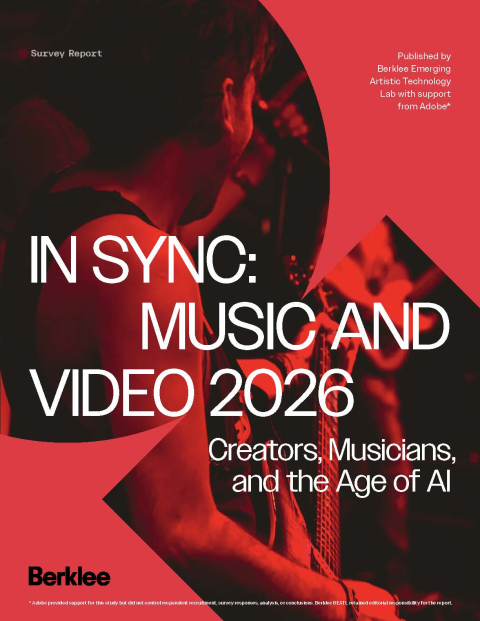
Led a national survey study in partnership with Berklee BEATL & Adobe to study AI use in the music industry.
How We Work
1. Initial consultation and plan
We meet to discuss your specific needs and confirm this is the right approach for the decision you're facing.
2. Project scoping and budget
You receive a custom scope of work with tasks, due dates, and budget before any work begins. Fixed scope, no hourly surprises.
3. Project execution
You receive updates on progress throughout, including recruitment status and fielding milestones.
4. A true partnership approach
We share insights with you as they come up throughout the project, so your team can start acting on what we learn long before the final report is finished.
5. Project completion
We deliver final insights in the format your team will actually use, whether that's a written report, an executive presentation, or a working session.
Frequently Asked Questions
-
It's research that tests whether real demand exists for a product or service before you invest in building it. Validation work asks whether people have the problem, whether it bothers them enough to act, what they're doing about it now, and what they'd pay for something better. It's the difference between believing there's a market and having evidence of one.
-
Market research is a broad category covering everything from market sizing to brand perception. Validation is one specific job inside it: testing whether a particular idea has real demand behind it. Validation studies tend to be narrower, faster, and aimed at a go or no-go decision.
-
Before you commit significant money or engineering time. The whole value of validation comes from running it while you can still change direction cheaply, so the ideal moment is when you have a clear idea and haven't yet built it. Validating after launch is still useful, but by then you're diagnosing a problem instead of deciding whether to start.
-
Focused studies typically run three to five weeks. Larger studies that combine interviews, a survey, and pricing work run six to eight. How hard your target customers are to reach is usually the biggest factor in the timeline.
-
It depends on the methods, the sample size, how hard your customers are to recruit, and participant incentives. A small interview-based study costs the least, and a multi-method study with a survey and pricing analysis costs the most. We provide a fixed-scope quote after an initial consultation.
-
For interview-based validation, twelve to twenty conversations with the right people usually gets you to the point where you stop hearing new things. If you need to compare segments or measure how widely something holds, you'll want a survey alongside the interviews with a few hundred responses.
-
You'll learn something, and you should do it. The limitation is that people who know you are inclined to be encouraging, and your network is rarely a representative sample of your market. We recruit people who have no relationship with you, and that's what makes the answers trustworthy.
-
Then you've learned something worth far more than it cost you. In practice, a flat no is rare. Much more often the findings point toward a different customer, a narrower use case, or a different price, and that redirection is usually the most valuable thing the study produces.
-
Yes. Investors ask how you know there's demand, and validation research gives you an answer with a method behind it. We build findings into investor-facing materials when that's what you need.
-
Yes. We write the screener, recruit to your criteria across the US and internationally, check that every participant genuinely qualifies, handle scheduling and reminders, and administer incentives.
Our Experience
More than 60 studies designed, including case study, quasi-experimental, RCT, and mixed-method designs
More than 100 focus groups and in-depth interviews conducted
More than $4 million in grant-funded research managed
Clients spanning Fortune 500 companies, startups, nonprofits, universities, and federally funded programs
Our researchers hold doctorates in educational neuroscience, psychology, and related fields
Want to know whether the demand is real?
Tell us what you're planning to build and who you think will buy it. We'll advise on the smallest study that would give you a trustworthy answer.