Program Evaluation Services
Program evaluation is the systematic study of whether a program is working, for whom, and why. Praxia Insights designs and conducts evaluations for nonprofits, schools, government-funded initiatives, and foundations, covering formative evaluation that improves a program while it runs and summative evaluation that assesses what it achieved.
Most organizations start thinking about evaluation because a funder asked for it. That's a reasonable reason, and it undersells what a good evaluation actually does for you.
An evaluation designed well tells you which parts of your program are doing the work, which sites or groups are getting less benefit than others, and what to change while you still have time to change it. The funder report is the byproduct.
We design evaluations around what you need to learn and what your funder needs to see, and we tell you plainly what we found, including when the answer is more complicated than anybody wanted.
Discuss your evaluation
Types of Evaluation We Conduct
1. Formative evaluation
Evaluation while the program is running, designed to improve it. This tells you how implementation is actually going across sites, where staff are running into difficulty, and which parts of the model are being delivered as designed.
2. Summative evaluation
Evaluation of outcomes at the end of a program or grant period, answering whether the program achieved what it set out to and for which participants.
3. Impact evaluation
Studies designed to establish whether the program caused the outcomes observed, using randomized controlled trials or quasi-experimental designs where the setting allows for them.
4. Implementation studies
Research into how a program is actually delivered on the ground, which often explains why outcomes vary between sites that were supposed to be running the same model.
5. Developmental evaluation
Evaluation for programs still taking shape, where the model is changing and the evaluation has to inform the design instead of judging a fixed intervention.
6. Needs assessment
Research establishing what the problem actually is and who it affects, usually before a program is designed or a proposal is written.
What’s Included:
1. Evaluation design and logic model
The theory of change connecting your activities to your outcomes, and an evaluation design capable of testing it within the constraints your program actually operates under.
2. Instrument development
Surveys, interview protocols, observation tools, and assessments built or selected for your population and your outcomes.
3. Data collection
Site and participant recruitment, scheduling, incentive administration, and collection across sites and time points.
4. Analysis
Statistical analysis for quantitative outcomes and thematic analysis for interview, focus group, and observation data, with the two brought together so the numbers have an explanation attached.
5. Reporting
Interim and final reports on your funder's schedule, plus board presentations, executive summaries, and stakeholder briefs, since the funder report is rarely the version your community wants to read.
6. Recommendations
What to change, based on what the evaluation found, written so program staff can act on it.
Programs We Have Evaluated
Department of Education EIR: served as Project Lead on a $3.75 million Education Innovation and Research randomized controlled trial, conducted in partnership with the American Institutes for Research.
Johns Hopkins CRRE: conducted a program evaluation of a blended instructional model across partner school districts nationally, in partnership with the Johns Hopkins Center for Research and Reform in Education.
Schusterman Family Foundation: led education program evaluation, data collection, and progress reporting under a Schusterman Family Foundation grant.
NIH-funded research: managed an NIH-funded study of neuropsychological adaptation in middle school students, including protocol design, site and participant recruitment, training of research and clinical staff, and all data collection and project reporting.
Our team has also worked with K-12 schools and districts across all 50 states and with international schools, so we know what a district will agree to and how much lead time research approval actually needs.
Project Examples
A NIH-funded study examining neuropsychological predictors of adaptation after trauma.

A five-year randomized control trial (RCT), funded by the U.S. Department of Ed, to study individualized math instruction.
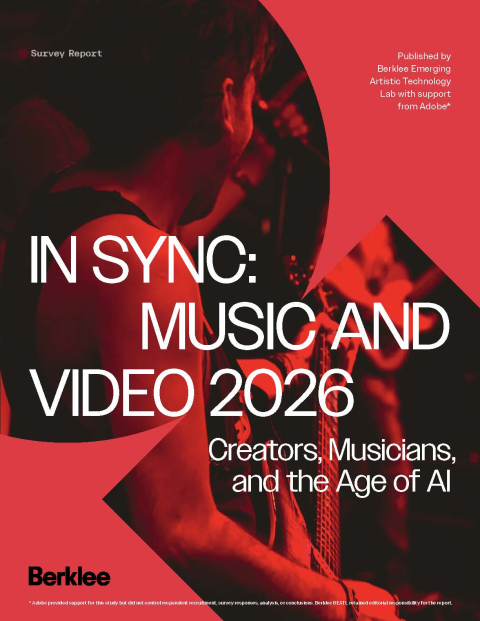
Led a national survey study in partnership with Berklee BEATL & Adobe to study AI use in the music industry.
How We Work
1. Initial consultation and plan
We meet to discuss your specific needs and confirm this is the right approach for the decision you're facing.
2. Project scoping and budget
You receive a custom scope of work with tasks, due dates, and budget before any work begins. Fixed scope, no hourly surprises.
3. Project execution
You receive updates on progress throughout, including recruitment status and fielding milestones.
4. A true partnership approach
We share insights with you as they come up throughout the project, so your team can start acting on what we learn long before the final report is finished.
5. Project completion
We deliver final insights in the format your team will actually use, whether that's a written report, an executive presentation, or a working session.
Frequently Asked Questions
-
Program evaluation is systematic research into whether a program is working, for whom, and why. It covers formative evaluation that improves a program while it runs and summative evaluation that assesses what it accomplished. Good evaluation answers questions your team has as well as questions your funder has.
-
Formative evaluation happens during the program and is meant to improve it, so it reports on implementation, early results, and what should change. Summative evaluation happens at the end and assesses outcomes. Most funded programs are expected to do both.
-
Evaluation is commonly budgeted at roughly five to ten percent of total program cost. Designs requiring randomization, multiple sites, or data collection over several years cost more than that, and smaller formative evaluations cost less. We provide a fixed-scope quote after an initial consultation.
-
It follows the program. A single-year formative evaluation runs the length of the program year plus reporting time. Multi-year impact evaluations run the full grant period, often three to five years. Shorter retrospective evaluations of a completed program typically take three to five months.
-
Yes, though it limits the design. Some rigorous approaches need comparison groups or baseline measures established before the program starts. If you're already mid-implementation we'll tell you which designs are still available and what claims the resulting evidence will support.
-
Only if your funder requires that level of evidence or you intend to make a causal claim about impact. RCTs are expensive and often impractical in real programs. Quasi-experimental designs, matched comparison groups, and strong mixed-method studies answer many evaluation questions well at a fraction of the cost.
-
You do, unless a funder agreement says otherwise. We'll agree data ownership, storage, and publication terms in writing at the start of the project.
-
We report what we found. Funders and boards are generally good at recognizing an evaluation that overstates results, and doing so damages your credibility for every report afterward. Findings that show a program working for some participants and not others are common and usually more useful than a flat positive result, because they tell you what to change.
-
Yes. Some organizations want a single evaluation and others want measurement infrastructure they can run themselves. We build instruments, data collection routines, and dashboards, and train your staff to maintain them.
-
Yes, extensively. Our team has run research with K-12 schools and districts across all 50 states and with international schools, and we know how district research approval processes work and how far ahead they need to start.
Our Experience
More than 60 studies designed, including case study, quasi-experimental, RCT, and mixed-method designs
More than 100 focus groups and in-depth interviews conducted
More than $4 million in grant-funded research managed
Clients spanning Fortune 500 companies, startups, nonprofits, universities, and federally funded programs
Our researchers hold doctorates in educational neuroscience, psychology, and related fields
Need to know whether your program is working?
Tell us about the program, the funder, and what you need to learn. We'll advise on the right design and what it would take.