Literature Reviews and Systematic Reviews
A literature review is a structured synthesis of existing research on a topic, establishing what is already known, where the evidence is contested, and what remains unstudied. Praxia Insights conducts literature reviews and systematic reviews for grant proposals, program design, assessment development, and academic publication.
A literature review is rarely the deliverable someone actually wants. It's the thing standing between them and a grant deadline, a program design, or a defensible claim about what works.
Done poorly, it becomes a list of studies with no argument running through it. Done well, it tells you what the evidence supports, where researchers disagree, and what your program or proposal can credibly claim as a result.
We conduct reviews with documented search strategies, transparent inclusion criteria, and synthesis that tells you what the evidence actually supports.
Discuss your literature review needs

When You Need a Literature Review
Writing a grant proposal: reviewers expect a demonstrated command of the existing evidence and a clear account of the gap your work fills.
Designing a program: before building an intervention, you need to know what has already been tried and what the evidence says about whether it worked.
Developing an assessment or instrument: item and construct development should be grounded in what researchers have already established and validated.
Making an evidence claim: if you intend to state that an approach works, the review is what makes that claim defensible.
Publishing: journals require a review that situates your contribution within the field.
What’s Included:
We Databases searched, terms used, date ranges, and filters applied, documented so the process can be reported and reproduced.
1. Search strategy
2. Screening and inclusion
Defined criteria for what counts, applied consistently, with the screening trail recorded.
3. Extraction and appraisal
Structured extraction of findings, methods, and sample characteristics, with assessment of study quality where the review calls for it.
Thematic organization that produces an argument: what the evidence supports, where it conflicts, and what remains unknown.
4. Synthesis
Formatted for your intended use, whether that's a grant narrative section, a program design document, a manuscript, or a standalone report, in APA or whatever style your context requires.
5. Written deliverable
Types of Review We Conduct
Narrative literature review
A synthesis of the relevant literature organized around themes and arguments. Appropriate for grant proposals, program design, and background sections where breadth and interpretation matter more than exhaustive coverage.
Systematic review
A review conducted to a documented protocol with predefined search strategies, inclusion and exclusion criteria, and screening procedures, so the process is transparent and reproducible. Appropriate when the review itself is the evidence base for a claim.
Scoping review
A structured map of what research exists on a topic and where the gaps are, useful when the field is broad or emerging and you need to understand the landscape before narrowing a question.
Rapid evidence review
A time-bounded synthesis for decisions that can't wait for a full systematic review. We're explicit about what was and wasn't covered so the limitations are visible to whoever uses it.
Project Examples

A NIH-funded study examining neuropsychological predictors of adaptation after trauma.

A five-year randomized control trial (RCT), funded by the U.S. Department of Ed, to study individualized math instruction.
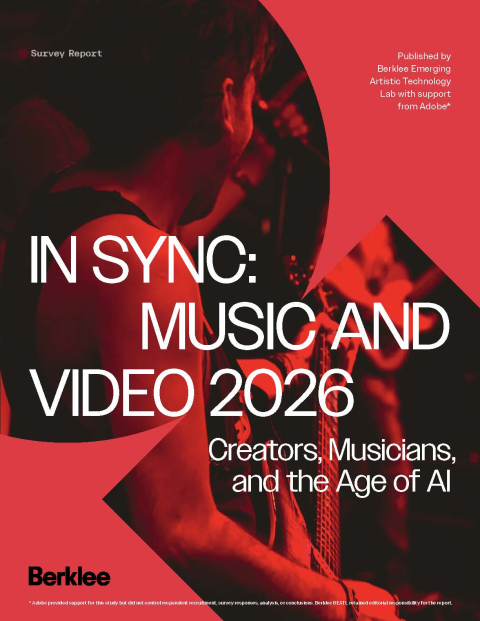
Led a national survey study in partnership with Berklee BEATL & Adobe to study AI use in the music industry.
How We Work
1. Initial consultation and plan
We meet to discuss your specific needs and confirm this is the right approach for the decision you're facing.
2. Project scoping and budget
You receive a custom scope of work with tasks, due dates, and budget before any work begins. Fixed scope, no hourly surprises.
3. Project execution
You receive updates on progress throughout, including recruitment status and fielding milestones.
4. A true partnership approach
We share insights with you as they come up throughout the project, so your team can start acting on what we learn long before the final report is finished.
5. Project completion
We deliver final insights in the format your team will actually use, whether that's a written report, an executive presentation, or a working session.
Frequently Asked Questions
-
A literature review synthesizes relevant research and is judged on the quality of its interpretation. A systematic review follows a documented protocol with predefined search and inclusion criteria so the process is transparent and reproducible, and is judged on the rigor of its method. Systematic reviews take substantially longer and are appropriate when the review itself functions as evidence.
-
Narrative reviews typically run three to six weeks depending on scope. Systematic reviews take considerably longer, often three months or more, because screening and appraisal at protocol standard is slow work. Rapid evidence reviews can be delivered in one to two weeks with stated limitations.
-
Cost depends on the type of review, the breadth of the topic, the volume of literature, and the depth of appraisal required. A rapid evidence review costs the least and a full systematic review costs the most. We provide a fixed-scope quote after an initial consultation.
-
Yes. This is one of the most common requests we receive. We write the review as a proposal section, structured to establish the problem, demonstrate command of the evidence, and make the case that your approach addresses a genuine gap.
-
Yes. Our researchers hold doctorates and maintain access to the databases required for serious review work, including peer-reviewed journals, dissertations, and grey literature where relevant.
-
We use AI to accelerate the work wherever it genuinely helps, including initial screening and organizing extracted data. Every piece of work is then manually reviewed by a researcher and complemented by human desk research. AI tools confidently generate citations that don't exist, so every source in our reviews is verified against the original.
-
Yes. Refreshing an existing review to capture newer literature is common, particularly for grant resubmissions and for programs that have been running long enough that the evidence base has moved. We'll work from your existing review and document what was added.
-
Yes, and it should. Our assessment development work begins with a literature review establishing the constructs, existing instruments, and validated items in the domain, so new items are built on constructs and measures that already have evidence behind them.
-
Whatever your context requires. APA is most common in our work, and we also write in AMA, Chicago, and journal-specific styles on request.
-
We'll tell you. A review that reports weak or mixed evidence is more useful than one that overstates, and reviewers and funders are generally good at spotting the difference. If the evidence turns out to be thin, that's worth knowing, and it often reshapes a program design for the better.
Our Experience
More than 60 studies designed, including case study, quasi-experimental, RCT, and mixed-method designs
More than 100 focus groups and in-depth interviews conducted
More than $4 million in grant-funded research managed
Clients spanning Fortune 500 companies, startups, nonprofits, universities, and federally funded programs
Our researchers hold doctorates in educational neuroscience, psychology, and related fields
Need a literature review you can build on?
Tell us the topic, the purpose, and the deadline. We'll advise on the type of review that fits and what it would take.