Survey Design and Programming
Survey design is the process of turning a research question into a set of questions that produce reliable, interpretable data. Praxia Insights designs surveys, programs them in your platform or ours, recruits and screens respondents, monitors data quality during fielding, and analyzes and reports the results.
Most bad survey data isn't caused by bad respondents. It's caused by questions that were ambiguous, leading, or asked in an order that shaped the answers.
By the time the data comes back, those problems are unfixable. You can't re-ask a leading question after the fact, and you can't recover a scale that meant different things to different people.
We design surveys so the results actually answer the question you asked, program them so they work on every device, recruit respondents who match your target, and watch data quality while the survey is still in field, so problems get caught while there's time to fix them.
Discuss your survey project
When You Need Survey Research
Surveys are the right method when you need to measure how widely something holds across a group of people:
Sizing a pattern: you've heard something anecdotally and need to know how widespread it is.
Comparing segments: you need to know whether groups genuinely differ or whether it just feels that way.
Tracking over time: you want a baseline you can measure against in six or twelve months.
Measuring satisfaction or intent: NPS, satisfaction, likelihood to renew, willingness to pay.
Reporting to funders or boards: you need numbers that will withstand scrutiny.
Surveys are the wrong method when you don't yet know what to ask. If the question is open-ended enough that you'd be guessing at the answer options, interviews or focus groups should come first, and the survey should follow.
What’s Included:
Question wording, response scales, logic, and sequencing built so the data can support the analysis you intend to run. We flag leading questions, double-barreled items, and scales that won't hold up while there's still time to change them.
1. Instrument design
2. Programming
We program in Qualtrics, SurveyMonkey, Typeform, Paperform, and Google Forms, including skip logic, piping, randomization, and quota management. If you have a platform, we work in it. If you don't, we'll recommend one based on what the study needs.
3. Screening and recruitment
Screener design and respondent recruitment across the US and internationally, with every respondent checked against your criteria before they're counted.
4. Quality monitoring during fielding
We watch sample composition against quotas, screen for straight-lining and inconsistent responses, and catch problems while there's still time to correct them.
5. Analysis
Descriptive and inferential statistics, segmentation and cross-tabs, significance testing where appropriate, and coding of open-ended responses into themes.
6. Reporting
Findings delivered as a written report, an executive presentation, a public-facing report with visualizations, or a working session, depending on who needs to act on the results.
We're platform-agnostic and program in whichever tool fits the study and your existing stack:
Qualtrics, for complex logic, academic research, and studies requiring advanced question types
Survey Monkey, for straightforward studies where speed matters
Type form and Paperform, where completion rates benefit from a conversational format
Google Forms, for simple internal or low-budget data collection
If your organization already licenses a platform, we build inside your account so you retain the data and the instrument.
Survey Platforms We Work In
Project Examples

A NIH-funded study examining neuropsychological predictors of adaptation after trauma.

A five-year randomized control trial (RCT), funded by the U.S. Department of Ed, to study individualized math instruction.
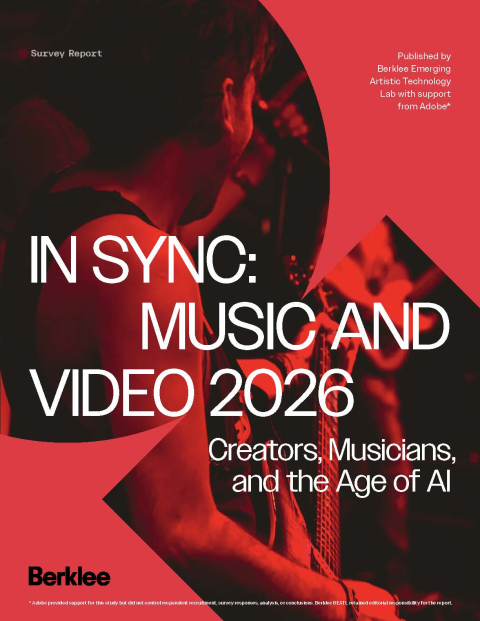
Led a national survey study in partnership with Berklee BEATL & Adobe to study AI use in the music industry.
How We Work
1. Initial consultation and plan
We meet to discuss your specific needs and confirm this is the right approach for the decision you're facing.
2. Project scoping and budget
You receive a custom scope of work with tasks, due dates, and budget before any work begins. Fixed scope, no hourly surprises.
3. Project execution
You receive updates on progress throughout, including recruitment status and fielding milestones.
4. A true partnership approach
We share insights with you as they come up throughout the project, so your team can start acting on what we learn long before the final report is finished.
5. Project completion
We deliver final insights in the format your team will actually use, whether that's a written report, an executive presentation, or a working session.
Frequently Asked Questions
-
It depends on what you need the data to do. Directional insight for internal decisions can work with a couple of hundred responses. Comparing subgroups requires enough responses inside each subgroup you want to compare. Publishing findings or reporting to funders usually calls for a sample sized against a stated margin of error. We size the sample to your use, and tell you honestly what a smaller sample would and wouldn't support.
-
Shorter than you want it to be. Completion rates fall as length rises, and the respondents who abandon are not a random subset. Ten minutes is a reasonable ceiling for general audiences and less for busy professionals. If everything feels essential, that's usually a sign the research question needs narrowing.
-
Yes. We recruit to your screener criteria across the US and internationally, verify qualification, manage reminders, and administer incentives through Tremendous. We can also field to your own customer or member list.
-
Most run four to six weeks from kickoff to final report. Design and programming take one to two weeks, fielding depends on how hard the audience is to reach, and analysis and reporting take one to two weeks.
-
Cost depends on sample size, how difficult respondents are to recruit, incentive levels, programming complexity, and the depth of analysis and deliverables. We provide a fixed-scope quote after an initial consultation.
-
Partly through design: clear wording, sensible scales, attention checks where appropriate. Partly through recruitment: checking that every respondent genuinely qualifies. And partly through monitoring during fielding, where we screen for straight-lining, implausible completion times, and inconsistent responses while the survey is still open.
-
Yes. Analysis is available as a standalone service. We'll also tell you honestly what the instrument will and won't support, which occasionally means flagging that a question can't answer what it was intended to.
-
Yes. Open-ended responses are coded into themes and reported with representative quotes. They're usually the most useful part of a survey and the part most often left unanalyzed because it takes time.
-
Yes. We field internationally, including across Europe and Asia, and administer incentives to international respondents. Cross-market work needs attention to translation and to whether concepts and scales carry the same meaning between markets.
-
Yes, and mixed-method designs are common in our work. A typical sequence uses interviews or groups to learn what to ask, then a survey to measure how widely it holds. Running both also lets you explain why a surprising number came out the way it did.
Our Experience
More than 60 studies designed, including case study, quasi-experimental, RCT, and mixed-method designs
More than 100 focus groups and in-depth interviews conducted
More than $4 million in grant-funded research managed
Clients spanning Fortune 500 companies, startups, nonprofits, universities, and federally funded programs
Our researchers hold doctorates in educational neuroscience, psychology, and related fields
Ready to field a survey that produces usable data?
Tell us what you need to measure. We'll advise on instrument design, sample size, and what it would take to do it properly.