In-Depth Interview Research
An in-depth interview is a one-on-one conversation with a participant, guided by a researcher, designed to understand how somebody thinks about a topic and why they made the decisions they did. Praxia Insights designs interview studies, recruits hard-to-reach participants, conducts the interviews, and analyzes the transcripts into findings you can act on.
Some things people won't say in a group. They'll say them one-on-one, to somebody who isn't from your company, once they're twenty minutes into a conversation and have stopped performing.
That's what in-depth interviews are for. They go further than a focus group on individual experience, they work for topics too sensitive or too personal for a group setting, and they're the right method when you need to understand one person's whole decision instead of a room's collective reaction.
We handle the whole study for you, including recruiting the professionals and specialists who are hardest to get on a call.
Discuss your interview study
When Interviews Are the Right Method
The topic is sensitive: people won't be candid in front of strangers, and a group setting would produce careful answers.
You need the whole decision: you want to follow one person's reasoning from beginning to end, including what they considered and rejected.
Participants are senior or scarce: getting eight executives into one room at one time is much harder than eight separate half-hour calls.
Experiences differ a lot: when everybody's situation is genuinely different, a group discussion averages away the detail you needed.
You're exploring: you don't yet know enough to write good survey questions, and interviews will tell you what to ask.
What’s Included:
1. Interview guide design
We write the guide, including the sequencing that gets somebody talking before the harder questions arrive. Opening with your most important question usually produces your worst answer to it.
2. Participant recruitment
Screener design, recruitment across the US and internationally, verification that each participant genuinely qualifies, plus scheduling, reminders, and incentive administration.
3. Conducting the interviews
Trained researchers conduct the interviews, remotely or in person. A good interviewer follows the thread that wasn't in the guide, and that's usually where the most useful material comes from.
4. Transcription and coding
Interviews are transcribed and coded for themes, with disagreements and outlying views kept visible instead of smoothed into a consensus that nobody actually expressed.
5. Analysis
Qualitative analysis identifying patterns across participants, supported by the participants' own words. We've also used interview analysis to produce practical outputs like job descriptions and work protocols.
6. Reporting
Findings delivered as a written report, an executive presentation, or a working session, with representative quotes attached to each theme.
Who We Interview
We recruit and interview across consumer, professional, clinical, and academic populations. Recent studies have included:
Healthcare and clinical professionals: including radiologists interviewed about their work with imaging technology.
Senior executives and decision-makers: VP through C-suite, including studies spanning the US, Europe, and Asia.
HR and benefits leaders: including those responsible for menopause and women's health benefit programs.
Technology buyers: product evaluators and decision-makers interviewed about prototypes and purchase decisions.
Employees and internal staff: interviews used to understand roles, work practices, and organizational needs.
Program participants and families: including parents and children interviewed as matched pairs.
Project Examples

A NIH-funded study examining neuropsychological predictors of adaptation after trauma.

A five-year randomized control trial (RCT), funded by the U.S. Department of Ed, to study individualized math instruction.
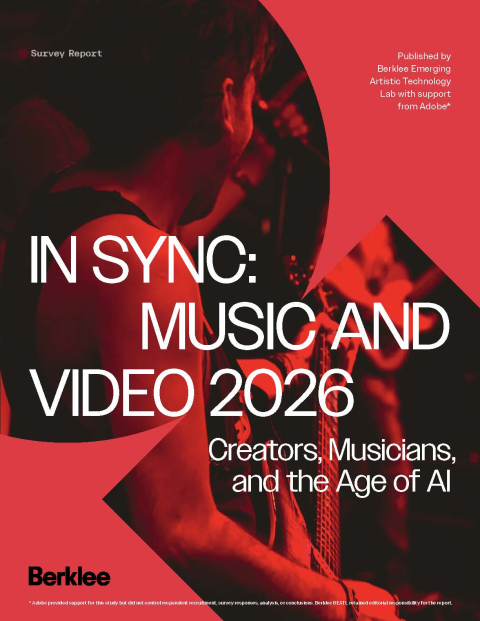
Led a national survey study in partnership with Berklee BEATL & Adobe to study AI use in the music industry.
How We Work
1. Initial consultation and plan
We meet to discuss your specific needs and confirm this is the right approach for the decision you're facing.
2. Project scoping and budget
You receive a custom scope of work with tasks, due dates, and budget before any work begins. Fixed scope, no hourly surprises.
3. Project execution
You receive updates on progress throughout, including recruitment status and fielding milestones.
4. A true partnership approach
We share insights with you as they come up throughout the project, so your team can start acting on what we learn long before the final report is finished.
5. Project completion
We deliver final insights in the format your team will actually use, whether that's a written report, an executive presentation, or a working session.
Frequently Asked Questions
-
Twelve to twenty is typical for a single population, and you generally stop when new interviews stop producing new themes. If you're comparing distinct groups, plan eight to twelve within each group so you can tell a group pattern from one person's strong opinion.
-
Forty-five to sixty minutes is standard, and thirty minutes works for narrow topics or very senior participants whose time is hard to get. Beyond an hour, attention drops and the last section of the guide tends to get rushed answers.
-
Interviews go deep on one person's experience and reasoning, and they work for sensitive topics. Focus groups show you how people respond to each other, what they argue about, and what language they use collectively. Many studies use both, with interviews first to learn what matters and groups afterward to test how it holds up in discussion.
-
Most run four to six weeks from kickoff to final report. Recruitment drives the timeline, so studies with senior professionals or clinicians take longer than general consumer work.
-
It depends on the number of interviews, how hard participants are to recruit, incentive levels, and the depth of analysis and deliverables. Interviews with senior professionals cost considerably more per participant because both recruitment and incentives are higher. We provide a fixed-scope quote after an initial consultation.
-
That's a large part of what we do. Our team has recruited and interviewed radiologists, senior executives across three continents, HR leaders responsible for specific benefit programs, and other narrow professional audiences. If your population is small or senior, that's a reason to talk to us.
-
Both, and remote is standard for most professional research now. In-person is worth the cost when the physical setting matters to what you're studying, or when participants would be more comfortable talking face to face.
-
Yes, with participant consent. Recordings and transcripts are available to you on request, and quotes in the reporting come directly from the transcripts.
-
Yes. Send us the transcripts and we'll code and analyze them. We've done this to turn employee interview transcripts into themes and then into practical documents like job descriptions and work protocols.
-
Participants are told at the outset how their responses will be used and reported. Findings are reported by theme with quotes attributed by role or category instead of by name, unless a participant has agreed to be identified.
Our Experience
More than 60 studies designed, including case study, quasi-experimental, RCT, and mixed-method designs
More than 100 focus groups and in-depth interviews conducted
More than $4 million in grant-funded research managed
Clients spanning Fortune 500 companies, startups, nonprofits, universities, and federally funded programs
Our researchers hold doctorates in educational neuroscience, psychology, and related fields
Need to understand what people really think?
Tell us who you need to talk to and what you need to learn. We'll advise on the right number of interviews and what it would take to recruit them.