Prototype Testing Services
Prototype testing puts an early version of your product in front of real users and watches what they do with it. Praxia Insights tests clickable prototypes, wireframes, physical mockups, and early builds, recruiting people who match your actual customers and reporting back what worked, what confused them, and what needs to change before you build.
A prototype test is one of the highest-return pieces of research you can run, because it happens at the last moment when changing the product is still cheap. Once engineering has built the thing, every fix costs more and somebody has to defend the original decision.
Designing the test well is what determines whether you learn anything. Handing someone a prototype and asking what they think produces polite opinions, so we ask people to accomplish something real and watch where they hesitate.
We handle the whole thing: writing the tasks, recruiting people who match your customers, running the sessions, and telling you what to change.
Discuss your prototype test
Clickable prototypes: Figma, InVision, or any interactive mockup users can move through on their own.
Static wireframes: even flat screens produce useful findings about whether people understand what they're looking at.
Early builds: partially finished products where core flows work and polish is still missing.
Physical products and packaging: mockups and samples people can handle, tested in person.
Concepts on paper: sketches and written descriptions, useful when you want to test the idea before investing in design.
The less finished the prototype, the more the test tells you about whether the concept makes sense, and the less it can tell you about whether the execution works. Both are worth knowing at different moments.
What We Can Test
What's Included
1. Test design
We write the tasks people will attempt and define what success looks like for each one. Task design decides the quality of everything that follows, since vague tasks produce vague findings and leading tasks confirm what you already assumed.
2. Participant recruitment
We write the screener and recruit people who match your real customers across the US and internationally, check that each one genuinely qualifies, and manage scheduling, reminders, and incentives.
3. Moderated sessions
A researcher runs each session live and can follow up when somebody does something unexpected, and those moments usually produce the most useful findings.
4. Unmoderated testing
Participants work through the prototype on their own while their screen and commentary are recorded. Faster and lower cost, and a good fit when you're checking specific flows.
5. Findings ranked by severity
Every issue is rated by how badly it stopped people and how many ran into it, so your team knows what has to be fixed before launch and what can wait.
6. Recommendations
Specific changes to make, with the evidence behind each one, delivered as a report or as a working session with your product and design team.
Do people understand it: can someone tell what this is and who it's for without being told?
Can they complete the task: do they get through the core flow, and where do they hesitate or give up?
Does it solve their problem: is the thing it does the thing they actually needed?
What's missing: what do people look for that isn't there?
Would they use it: what would have to be true before they'd switch from whatever they use now?
What a Prototype Test Answers
Project Examples

A NIH-funded study examining neuropsychological predictors of adaptation after trauma.

A five-year randomized control trial (RCT), funded by the U.S. Department of Ed, to study individualized math instruction.
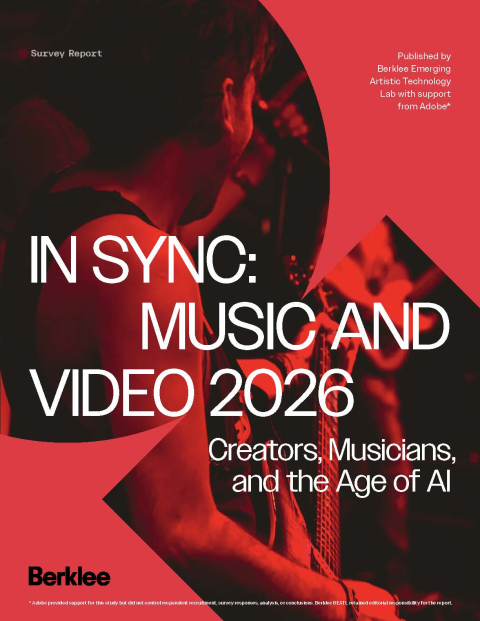
Led a national survey study in partnership with Berklee BEATL & Adobe to study AI use in the music industry.
How We Work
1. Initial consultation and plan
We meet to discuss your specific needs and confirm this is the right approach for the decision you're facing.
2. Project scoping and budget
You receive a custom scope of work with tasks, due dates, and budget before any work begins. Fixed scope, no hourly surprises.
3. Project execution
You receive updates on progress throughout, including recruitment status and fielding milestones.
4. A true partnership approach
We share insights with you as they come up throughout the project, so your team can start acting on what we learn long before the final report is finished.
5. Project completion
We deliver final insights in the format your team will actually use, whether that's a written report, an executive presentation, or a working session.
Frequently Asked Questions
-
Ask people to do things instead of asking them what they think. Give them a realistic task, watch where they hesitate, and ask what they expected to happen when something surprises them. Direct opinion questions like whether they like it produce polite answers that predict nothing. The most useful question after a task is usually asking them to describe what just happened in their own words.
-
Five to eight participants per user group will show you the large majority of problems. If you have several meaningfully different types of customer, plan five to eight for each. Testing with more people mostly repeats findings you've already seen.
-
Less finished than you'd think. Clickable prototypes work well, and even static wireframes or paper sketches produce useful findings. What matters is that people can attempt something realistic with it. Waiting until it's polished defeats the purpose, because by then the expensive decisions are already made.
-
Most studies run three to five weeks from kickoff to findings. Recruitment drives the timeline more than anything else, so general consumer audiences move quickly and specialized professionals take longer.
-
It depends on the number of sessions, whether they're moderated, how hard participants are to recruit, incentive levels, and what deliverables you need. We provide a fixed-scope quote after an initial consultation.
-
Yes. Physical products, packaging, and hardware can be tested in person when handling the object is part of what you need to observe. We've also run sessions with participants recruited in pairs, for products two people use together.
-
Yes, and we'd encourage it. Clients regularly observe remote sessions through a separate observer channel so they can react without participants seeing them. Watching somebody struggle with a flow your team was confident about tends to end an internal debate faster than any report.
-
They use the same methods and the difference is timing. Prototype testing happens before the product is built and asks whether the concept and the design work. Usability testing happens on something that already exists and asks how well people can use it. Prototype testing is cheaper to act on because nothing has been built yet.
-
Partly. It tells you whether people understand the product, can use it, and see the value in it, all of which matter for purchase. It won't tell you what they'd pay or how it compares to alternatives, and pricing research and competitive work answer those. Many teams run them together before a launch.
-
A findings report with issues ranked by severity, supported by session clips or participant quotes, plus specific recommendations for what to change. Recordings and transcripts are available on request, and some teams prefer a live walkthrough with their design team over a written document.
Our Experience
More than 60 studies designed, including case study, quasi-experimental, RCT, and mixed-method designs
More than 100 focus groups and in-depth interviews conducted
More than $4 million in grant-funded research managed
Clients spanning Fortune 500 companies, startups, nonprofits, universities, and federally funded programs
Our researchers hold doctorates in educational neuroscience, psychology, and related fields
Ready to test it before you build it?
Tell us what you're making and what you need to learn. We'll advise on the right method, sample, and scope.