Research for Startups
Research for startups is customer, market, and product research scoped to the speed and budget an early-stage company actually has. Praxia Insights runs market validation, customer discovery, competitive analysis, prototype testing, pricing research, and market sizing for founders who need evidence before committing to the runway.
Most startups don't fail because the product was built badly. They fail because it was built for a need that wasn't urgent enough, sold to a buyer who wasn't the real buyer, or priced against a comparison nobody made.
Those are research questions, and they're cheapest to answer before the build. The problem is that traditional research firms are scoped and priced for companies with research budgets, and most startups don't have one.
We scope differently for early-stage work: narrower questions, faster timelines, and deliverables built for the two audiences a founder actually has, which are the team and the investors.
Discuss your research needs
Research by Stage
1. Pre-product: is this real?
Market validation and customer discovery before you build. We test whether the problem is severe enough that people are already working around it, who has it worst, and what they'd have to give up to switch. The goal is to find out an idea is wrong while that's still cheap.
2. Pre-launch: will they use it, and pay?
Prototype and concept testing with your target users, plus pricing research to establish what buyers will pay and what they compare you against. This is the last inexpensive moment to change direction.
3. Post-launch: why isn't it working?
When adoption is below plan, the cause is usually the product, the positioning, or the audience, and the three require different fixes. Customer interviews, usability testing, and funnel research separate them.
4. Fundraising: can you defend the market?
Market sizing, competitive analysis, and product-market fit evidence built into materials that survive investor questioning. A TAM number without a defensible method behind it is worse than no number.
What Founders Usually Need
Market validation: evidence that the problem is real and urgent before you commit engineering time.
Customer discovery: interviews that show you how your buyer describes the problem in their own words.
Market sizing: TAM, SAM, and SOM built from a method you can walk an investor through.
Competitive analysis: what alternatives actually offer, charge, and claim, including what their sales team says on a demo.
Prototype testing: real users attempting real tasks before the product is finished.
Pricing research: what buyers will pay, and where the number becomes a barrier.
Ideal customer profile: which segment to focus scarce time and spend on.
Scoped for Early-Stage Constraints
Startup research fails when it's scoped like enterprise research. A twelve-week study answering six questions is the wrong shape for a company deciding what to do this quarter.
We scope narrow and move fast. One clear question, the smallest study that answers it credibly, and findings delivered while the decision is still open. If a smaller sample or a lighter method would give you what you need, we'll tell you that.
We'll also tell you when research isn't the answer. Sometimes the fastest path is releasing something small and measuring what happens, and we'll tell you that even though it means we don't get the work.
A full study in two weeks
For a consumer brand, we ran survey design, participant recruitment, survey administration, focus group facilitation, analysis, and final reporting inside a two-week window, start to finish.
Project Examples

A NIH-funded study examining neuropsychological predictors of adaptation after trauma.

A five-year randomized control trial (RCT), funded by the U.S. Department of Ed, to study individualized math instruction.
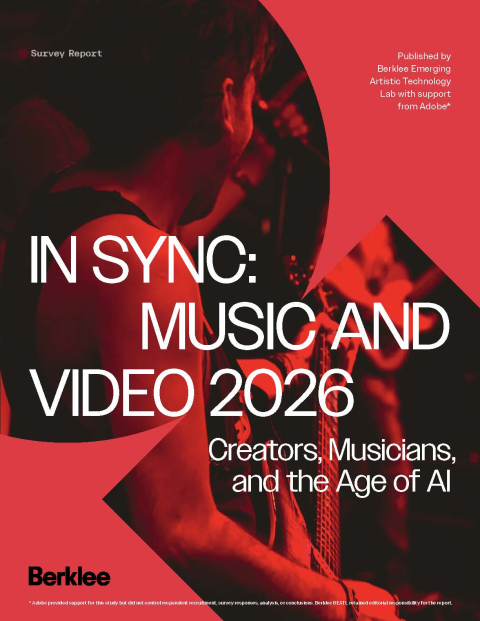
Led a national survey study in partnership with Berklee BEATL & Adobe to study AI use in the music industry.
How We Work
1. Initial consultation and plan
We meet to discuss your specific needs and confirm this is the right approach for the decision you're facing.
2. Project scoping and budget
You receive a custom scope of work with tasks, due dates, and budget before any work begins. Fixed scope, no hourly surprises.
3. Project execution
You receive updates on progress throughout, including recruitment status and fielding milestones.
4. A true partnership approach
We share insights with you as they come up throughout the project, so your team can start acting on what we learn long before the final report is finished.
5. Project completion
We deliver final insights in the format your team will actually use, whether that's a written report, an executive presentation, or a working session.
Frequently Asked Questions
-
Often it's the point at which research is worth the most, because you still have the option to change direction. The cheapest research you'll ever run is the study that stops you building the wrong thing. What matters at this stage is scoping it small: one question, answered credibly, fast.
-
It depends on the question, the method, how hard your customers are to reach, and participant incentives. A focused validation study with a small number of interviews is a different order of magnitude from a full segmentation and pricing study. We scope to your budget and tell you honestly what it will and won't answer.
-
Focused studies can move in two to three weeks, and we've delivered full studies including recruitment, fielding, and reporting inside two weeks. Speed depends mostly on how hard your audience is to recruit: general consumers move fast, senior professionals don't.
-
You should, and founder-led customer conversations are genuinely valuable. Where we help is with the parts that are hard to do yourself: reaching people outside your network, asking questions that don't lead the witness, and hearing what a buyer who chose a competitor actually thinks. Founders are also the worst-placed people to run an unbiased test of their own idea, and that's true of anyone testing something they built.
-
A method someone can follow, sources that can be checked, and stated assumptions. Investors rarely challenge the number itself; they challenge how you got it. A sizing built bottom-up from identifiable customer counts and realistic pricing survives questioning that a top-down percentage of a large market does not.
-
The useful evidence is in what people do. They keep using it without being reminded, they describe it accurately to other people, and they'd be genuinely stuck if it disappeared tomorrow. Research helps by measuring that across all of your users, including the quiet ones you never hear from.
-
Yes. Market sizing, competitive positioning, and product-market fit evidence are standard components of a fundraise narrative, and we build them into investor-facing decks designed to hold up when questioned.
-
We do, though we can also work from your user list. We recruit to your screener across the US and internationally, verify participants qualify, handle scheduling, and administer incentives. Reaching people outside your own network is often the specific thing founders can't do alone.
-
Then it saved you the runway you were about to spend finding out the expensive way. In practice results are rarely a flat no; more often they point to a different buyer, a narrower use case, or a different price. That redirection is usually the most valuable thing the study produces.
-
Yes, and we'd usually recommend it. Start with the single question blocking your next decision. If the findings raise a bigger question worth answering, we'll scope the next study when you get there.
Our Experience
More than 60 studies designed, including case study, quasi-experimental, RCT, and mixed-method designs
More than 100 focus groups and in-depth interviews conducted
More than $4 million in grant-funded research managed
Clients spanning Fortune 500 companies, startups, nonprofits, universities, and federally funded programs
Our researchers hold doctorates in educational neuroscience, psychology, and related fields
Not sure what you're building is what people want?
Tell us what decision you're facing and what your timeline looks like. We'll advise on the smallest study that would answer it.