Voice of Customer Research
Voice of customer research captures what your customers actually think and the words they use to say it, gathered directly from them through interviews, surveys, and focus groups. Praxia Insights runs voice of customer studies so your product, messaging, and customer experience are built on what buyers said instead of on what your team assumes they meant.
Every company has a version of what its customers care about. It gets assembled from sales calls, support tickets, a few loud accounts, and whatever the last person in the room said with conviction.
Voice of customer research replaces that with evidence. You hear customers describe the problem in their own language, and it's almost never the language on your website. You also learn what they weighed before choosing you and what nearly stopped them.
The most immediately useful output is usually the words themselves. Marketing teams copy customer phrasing directly into headlines and see conversion move, because the copy finally sounds like the problem people came in with.
Discuss your voice of customer study
The words they use: how customers describe their problem before they've heard your framing of it.
What they actually value: which parts of your product they'd fight to keep, and which they've never opened.
Why they bought: what triggered the search, what they compared you against, and what nearly stopped them.
Where the experience breaks: the moments in onboarding, support, or renewal that cost you goodwill.
What they'd change: the improvements customers ask for unprompted, ranked by how many raise them.
Why people leave: what churned customers say when somebody outside your company asks them.
What Voice of Customer Research Tells You
How We Gather It
Customer interviews
One-on-one conversations that go deep on individual experience, including the parts customers won't say in a group or in a survey box.
Focus groups
Moderated discussions where customers respond to each other, which brings out disagreement and shared language that a set of individual conversations can miss.
Surveys
Quantitative measurement of how widely a theme holds across your customer base, with open-ended questions coded into themes so you keep the language alongside the numbers.
Win-loss and churn research
Conversations with people who chose a competitor or left you. These are uncomfortable and consistently the most valuable interviews in a voice of customer program.
Review and support ticket analysis
Systematic analysis of what customers have already written in reviews, support tickets, and community forums. You're already sitting on that material and have probably never coded it.
Analysis and reporting
Themes with representative quotes attached, ranked by how often they came up, and specific recommendations for product, messaging, and experience.
Project Examples

A NIH-funded study examining neuropsychological predictors of adaptation after trauma.

A five-year randomized control trial (RCT), funded by the U.S. Department of Ed, to study individualized math instruction.
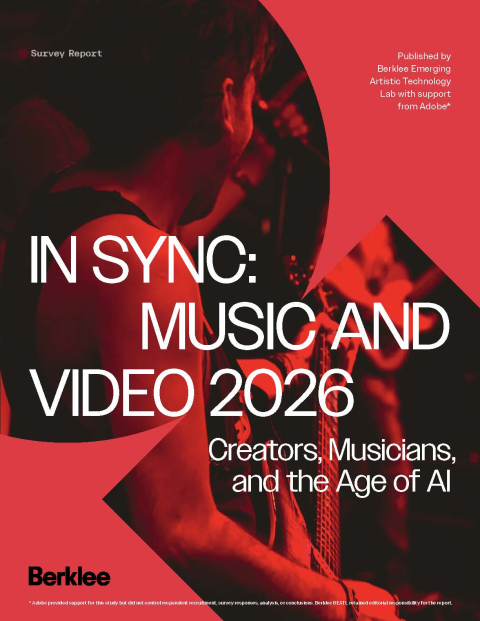
Led a national survey study in partnership with Berklee BEATL & Adobe to study AI use in the music industry.
How We Work
1. Initial consultation and plan
We meet to discuss your specific needs and confirm this is the right approach for the decision you're facing.
2. Project scoping and budget
You receive a custom scope of work with tasks, due dates, and budget before any work begins. Fixed scope, no hourly surprises.
3. Project execution
You receive updates on progress throughout, including recruitment status and fielding milestones.
4. A true partnership approach
We share insights with you as they come up throughout the project, so your team can start acting on what we learn long before the final report is finished.
5. Project completion
We deliver final insights in the format your team will actually use, whether that's a written report, an executive presentation, or a working session.
Frequently Asked Questions
-
It's research that captures what customers think about your product, your category, and their own problem, gathered directly from them and reported in their language. It typically combines interviews, surveys, and focus groups, and the output is used for product decisions, messaging, and customer experience work.
-
Three to six months for a full development cycle including literature review, item writing, expert review, piloting, and revision. Building the online platform adds time. Shorter timelines are possible for research instruments that won't be commercially sold and don't need the same validation.
-
For interview-based work, twelve to twenty conversations per customer segment usually gets you to the point where themes repeat. If you need to measure how widely a theme holds, add a survey with a few hundred responses. Segments matter more than the total, since twenty interviews spread across five different customer types tells you little about any of them.
-
Both are useful and they produce different answers. Your team gets access and context. We get candor, because customers say things to an outside researcher that they won't say to the company they're paying. Churned customers in particular will rarely be honest with the vendor they left.
-
Four to eight weeks for most studies, depending on how many segments you're covering and how hard your customers are to schedule. Business customers with full calendars take longer than consumers.
-
It depends on the methods, the number of segments, how many participants, incentive levels, and the depth of analysis. An interview-only study of one segment costs the least, and a multi-method program covering several segments plus churn research costs the most. We provide a fixed-scope quote after an initial consultation.
-
Yes, and that's common. We can work from your customer list, recruit independently when you want people outside your base, or combine both. Recruiting from your list works better when the invitation comes from us, since customers are more candid with an outside researcher.
-
Yes. Churn and win-loss interviews are among the most useful conversations in this work. Former customers are usually willing to explain what happened, especially to somebody outside the company, and what they say tends to be more specific than the reason recorded in your CRM.
-
Most teams use them in three places: product roadmap decisions, messaging and website copy rewritten in customer language, and customer experience fixes at the moments people described as difficult. We deliver findings organized so each of those teams can act on their part.
-
Annually works for most organizations, with lighter continuous listening in between. Some teams run a small number of customer interviews every month, which keeps the picture current and costs far less than a large study once a year.
Our Experience
More than 60 studies designed, including case study, quasi-experimental, RCT, and mixed-method designs
More than 100 focus groups and in-depth interviews conducted
More than $4 million in grant-funded research managed
Clients spanning Fortune 500 companies, startups, nonprofits, universities, and federally funded programs
Our researchers hold doctorates in educational neuroscience, psychology, and related fields
Want to hear what your customers actually say?
Tell us who your customers are and what you're trying to decide. We'll advise on the right mix of methods and what it would take.