A logic model shows how your program's activities are supposed to lead to the outcomes you're claiming, and an evaluation plan sets out how you'll test whether that actually happened. Praxia Insights builds both, for grant applications, program design, and funder reporting.
Most people come to us for a logic model because a funder asked for one, and they treat it as a form to fill in. That's understandable, and it's also why so many logic models don't hold up when a reviewer reads them closely.
A logic model is really just your program's argument written down. You're saying that if you do these activities with these people, then these things will change, and here's why you think so. When you write that out properly, you usually find at least one place where the reasoning has a hole in it, and it's much better to find that at the proposal stage than three years into a grant.
We'll build the logic model with you, and then we'll build the evaluation plan that tests it, so the two documents actually match each other.
Discuss your logic model or evaluation plan
Logic Models and Evaluation Plans

When You Need One
You're writing a grant application: most federal and foundation applications ask for a logic model or theory of change, and reviewers score it.
You're designing a program: writing the model first forces you to be specific about who you're serving and what you expect to change for them.
Your funder wants an evaluation plan: you need to say what you'll measure, how, and when, before the money is awarded.
Your program has drifted: what you're delivering today doesn't quite match what you said you'd deliver, and you need to reconcile the two.
You're reporting and can't tell the story: you have activity data and no clear line from it to the outcomes you promised.
What Goes Into a Logic Model
Inputs
What you're putting in, including staff, funding, partners, curriculum, facilities, and anything else the program depends on to run at all.
Short-term outcomes
What changes first, usually in knowledge, skills, attitudes, or confidence, and usually within the first year.
Activities
What you'll actually do, described specifically enough that somebody could tell whether it happened. "Provide training" isn't specific enough, and "deliver 12 hours of coaching per teacher across the school year" is.
Long-term outcomes
The changes in behavior, condition, or status that the program exists to produce, which often take longer than a single grant period to show up.
Outputs
The direct, countable results of those activities, like how many people were served, how many sessions ran, and how many completed the program.
Assumptions and external factors
What has to be true for the model to work, and what could get in the way that you don't control. Reviewers notice when this section is missing, because every program has both.
What Goes Into an Evaluation Plan
Evaluation questions: what you're actually trying to find out, written as questions somebody could answer with data.
Design: whether you're running a randomized controlled trial, a quasi-experimental design, a mixed-method study, or a formative evaluation, and why that design fits.
Measures and instruments: what you'll measure each outcome with, and whether those instruments already exist or need building.
Data collection: who you'll collect from, when, how often, and who does the collecting.
Analysis: what you'll do with the data once you have it, described specifically enough that a reviewer can tell you've thought it through.
Timeline and reporting: when each piece happens and when your funder gets what.
Project Examples

A NIH-funded study examining neuropsychological predictors of adaptation after trauma.

A five-year randomized control trial (RCT), funded by the U.S. Department of Ed, to study individualized math instruction.
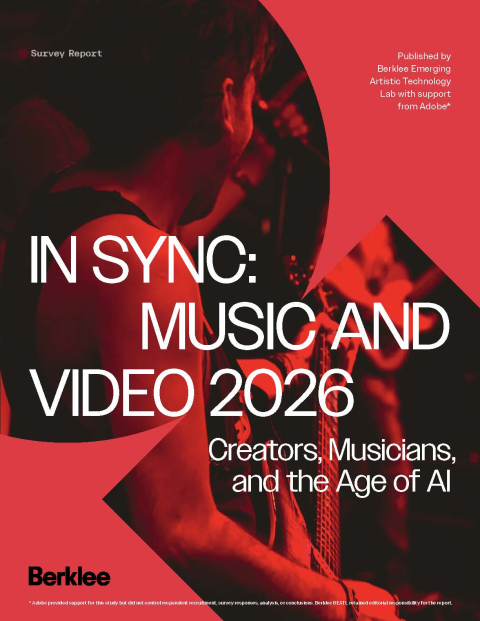
Led a national survey study in partnership with Berklee BEATL & Adobe to study AI use in the music industry.
How We Work
1. Initial consultation and plan
We meet to discuss your specific needs and confirm this is the right approach for the decision you're facing.
2. Project scoping and budget
You receive a custom scope of work with tasks, due dates, and budget before any work begins. Fixed scope, no hourly surprises.
3. Project execution
You receive updates on progress throughout, including recruitment status and fielding milestones.
4. A true partnership approach
We share insights with you as they come up throughout the project, so your team can start acting on what we learn long before the final report is finished.
5. Project completion
We deliver final insights in the format your team will actually use, whether that's a written report, an executive presentation, or a working session.
Frequently Asked Questions
-
A logic model is a one-page picture of how your program is supposed to work. It lays out what you're putting in, what you'll do, what that produces directly, and what you expect to change as a result, in a sequence somebody can follow. Funders ask for one because it shows whether you've thought your program through.
-
A logic model shows the sequence from inputs through activities to outcomes, and it's usually a single page. A theory of change goes further and explains why you believe each step leads to the next, including the assumptions underneath. Some funders want one, some want the other, and quite a few use the terms interchangeably, so check the solicitation.
-
A logic model on its own usually takes two to three weeks, including a working session with your team and a round of revisions. If you need a full evaluation plan alongside it, plan on four to six weeks. If your deadline is tighter than that, tell us the date and we'll tell you honestly what we can do.
-
It depends on whether you need just the logic model, or the evaluation plan too, and on how complex the program is. A single-program logic model costs the least, and a full evaluation plan for a multi-site program costs the most. We'll give you a fixed-scope quote after an initial consultation.
-
Yes, and it's common. Plenty of organizations have been running a program for years without ever writing the model down, and doing it retrospectively is useful because it shows you where what you're delivering has drifted from what you originally intended.
-
Yes. The best logic models get built with the people who actually run the program, because they know where the model would break in practice. We'll facilitate a working session, draft from what comes out of it, and bring it back for your review.
-
We build to the funder's stated requirements, so tell us which program you're applying to and we'll work from their guidance. If they've published a template or a required format, we'll use it.
-
That's normal, especially when the outcomes take longer than the grant period. The answer is usually to identify intermediate outcomes that are measurable inside your timeline and that the research says predict the longer-term change. Reviewers accept that when the reasoning is stated clearly.
-
Yes. Instrument development is part of what we do, and building the measures alongside the plan means they'll actually match the outcomes you said you'd measure.
-
Yes. Plenty of clients start with the logic model and evaluation plan at the proposal stage and then bring us on as external evaluator once they're funded. Building the plan is also how we learn enough about your program to run the evaluation well.
Our Experience
More than 60 studies designed, including case study, quasi-experimental, RCT, and mixed-method designs
More than 100 focus groups and in-depth interviews conducted
More than $4 million in grant-funded research managed
Clients spanning Fortune 500 companies, startups, nonprofits, universities, and federally funded programs
Our researchers hold doctorates in educational neuroscience, psychology, and related fields
Need a logic model or evaluation plan?
Tell us about the program, the funder, and your deadline, and we'll advise on what you need and what it would take.