Concept and Message Testing
Every team ends up arguing about a headline at some point. Somebody likes the version that explains what the product does, somebody else likes the version that names the problem the customer has, and the argument usually gets settled by whoever happens to be most senior in the room that day.
You can settle it with evidence instead, and it isn't complicated to do. You put both versions in front of real buyers, you watch which one they understand, and you find out which problem they thought you were solving.
Product concepts work this way too. An idea that's completely obvious to the team that invented it is often confusing to everybody else, and it's a lot cheaper to find that out in a test than to find it out after you've launched.
Discuss your concept or message test
Concept Testing
Do they understand it: can somebody read the description and explain back what it does?
Is the problem real for them: do they recognize the problem it solves as one they have?
Is the solution believable: do they think it would actually work?
How does it compare: what do they weigh it against, and does it seem better?
Would they act: what would have to be true before they'd buy or switch?
Concepts can be tested as written descriptions, sketches, mockups, or landing pages. The less finished the concept, the more the test tells you about the idea itself and the less it can tell you about the execution.
Message Testing
Message testing evaluates the words you're planning to use, whether that's a headline, a value proposition, a campaign, or a full page of copy:
Comprehension: what people think you're offering after reading it once.
Relevance: whether the problem you named is the problem they have.
Believability: whether people find the claim credible or dismiss it as marketing.
Differentiation: whether they can tell you apart from the alternatives after reading it.
Preference: which version works better, and with which group of buyers.
Language: the words they use to describe it back to you, which are often better than yours.
What's Included
Test design
We'll decide what each version needs to answer, how many variations are worth testing, and whether people should see one version on its own or compare several at once. If you show somebody two headlines together you'll get a different answer than if you show them one at a time, and both approaches are useful depending on what you're trying to learn.
Quantitative testing
We'll run surveys measuring comprehension, appeal, and preference across a larger group, so you know how widely a reaction holds up and whether the gap between two versions is real or just noise.
Participant recruitment
We'll recruit people who match your actual buyers, in the US and internationally, and we'll check that every one of them genuinely qualifies before we confirm them. We'll handle the scheduling and the incentives too.
Analysis
We'll report findings by version and by segment, because a message that works beautifully for one group often works badly for another, and averaging everybody together hides it.
Qualitative testing
We'll run interviews or focus groups where people react to the concept or the copy and then explain their thinking, so you find out why something landed and why something else didn't.
Recommendations
We'll tell you which version to use, what to change about it, and which customer phrases are worth borrowing word for word.
Project Examples

A NIH-funded study examining neuropsychological predictors of adaptation after trauma.

A five-year randomized control trial (RCT), funded by the U.S. Department of Ed, to study individualized math instruction.
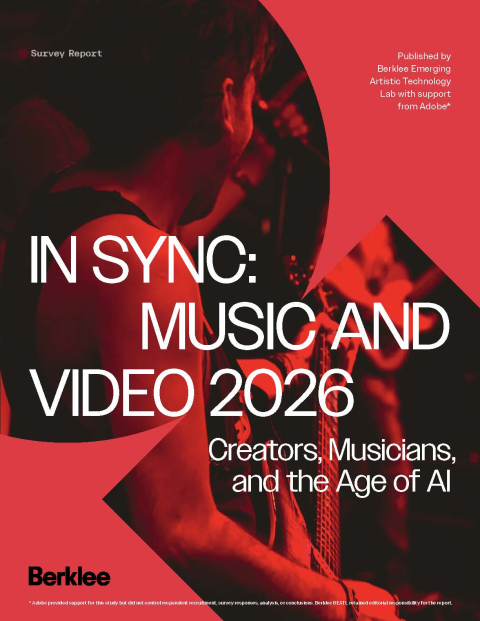
Led a national survey study in partnership with Berklee BEATL & Adobe to study AI use in the music industry.
How We Work
1. Initial consultation and plan
We meet to discuss your specific needs and confirm this is the right approach for the decision you're facing.
2. Project scoping and budget
You receive a custom scope of work with tasks, due dates, and budget before any work begins. Fixed scope, no hourly surprises.
3. Project execution
You receive updates on progress throughout, including recruitment status and fielding milestones.
4. A true partnership approach
We share insights with you as they come up throughout the project, so your team can start acting on what we learn long before the final report is finished.
5. Project completion
We deliver final insights in the format your team will actually use, whether that's a written report, an executive presentation, or a working session.
Frequently Asked Questions
-
Concept testing puts a product or service idea in front of target buyers before it's built, to learn whether they understand it, whether the problem it solves is one they have, and whether they'd act on it. It's the cheapest point at which to find out an idea doesn't land.
-
Message testing evaluates the words you plan to use, including headlines, value propositions, and campaign copy, against real buyers. It measures what people understood, whether the claim was believable, and which version worked better with which group.
-
Three to five versions works well. Beyond that, participants start comparing the versions against each other instead of reacting to any one of them, and the differences get harder to interpret. If you have more candidates, a quick screen can narrow the field before detailed testing.
-
Qualitative testing works with twelve to twenty participants per audience. Quantitative testing measuring preference between versions wants at least a couple of hundred responses, and more if you need to compare segments. Many studies do both, using interviews to learn why and a survey to learn how widely.
-
Three to five weeks for most studies. Qualitative-only tests can move faster. Recruitment difficulty drives the timeline more than anything else.
-
It depends on the number of versions, whether the study is qualitative, quantitative, or both, how hard participants are to recruit, and incentive levels. We provide a fixed-scope quote after an initial consultation.
-
Usually prospects, because your existing customers already understand your category and your product, and that knowledge is exactly what a new buyer lacks. Testing with customers tells you about upsell and retention messaging, so it depends what the copy has to do.
-
A/B testing measures which version performs better once both are live, and it needs traffic and time. Concept and message testing happens before launch and tells you why people react the way they do. Many teams use testing to pick the two versions worth A/B testing afterward.
-
Yes. Longer copy can be tested for comprehension and for where attention drops off, and we've run focus groups with buyers reviewing a company's website and sales funnel, with the findings used to rebuild both.
-
That usually means the versions are more similar than the team thought, or the test asked people whether they liked something instead of making them choose. We design tests that force a choice and check comprehension, because appeal on its own predicts very little.
Our Experience
More than 60 studies designed, including case study, quasi-experimental, RCT, and mixed-method designs
More than 100 focus groups and in-depth interviews conducted
More than $4 million in grant-funded research managed
Clients spanning Fortune 500 companies, startups, nonprofits, universities, and federally funded programs
Our researchers hold doctorates in educational neuroscience, psychology, and related fields
Want to know whether your idea lands?
Tell us what you're testing and who it's for. We'll advise on the right method and what it would take.