Vendor Evaluation and Selection Research
Vendor evaluation research is independent assessment of the products or providers an organization is considering, conducted by a third party with no stake in the outcome. Praxia Insights evaluates vendors for schools, districts, universities, nonprofits, and companies, covering capability comparison, reference and user research, and evidence review.
Vendor selection usually happens on the vendors' terms. Each one demos well, each one supplies references who were chosen for being happy, and each one has a case study showing strong results.
An independent evaluation changes what the committee has in front of them. We evaluate against criteria you set before the demos start, talk to users the vendor didn't select, and read the evidence behind the claims to see whether it supports them.
Independence is the point. We don't take referral fees or partnership arrangements from vendors, so the recommendation is based on the evidence.
Discuss your vendor evaluation

Who This Is For
School districts and networks: choosing a curriculum, intervention, assessment platform, or edtech product for thousands of students.
Universities and colleges: selecting an LMS, student success platform, or service provider under a formal procurement process.
Nonprofits and foundations: choosing a partner, platform, or provider where a board or funder expects documented diligence.
Companies: evaluating enterprise software or a service partner where the contract is large enough to warrant outside review.
Boards and procurement committees: bodies that need an independent voice in a decision staff have already formed opinions about.
What an Evaluation Includes
Criteria development
We work with you to define what actually matters before any vendor presents. Criteria written after the demos tend to describe whichever product impressed the room, and the order matters more than people expect.
Capability comparison
Structured comparison of what each vendor genuinely does against your criteria, tested where possible instead of taken from a feature list.
Evidence review
Assessment of the research behind a vendor's effectiveness claims, including whether the study design supports the claim being made. This matters most in education, where a product may cite research that doesn't meet the evidence standard a funder requires.
Independent reference research
Interviews with current and former users we identify ourselves, alongside the references the vendor supplies. Former customers are the most informative conversations in a vendor evaluation and the ones vendors never offer.
User and stakeholder research
Research with the people who will actually use the product, whether that's teachers, staff, students, or clinicians. Committees regularly select tools that the people using them find unworkable.
Total cost analysis
What the vendor quoted alongside the costs that appear later: implementation, training, integration, support tiers, and what renewal looks like in year three.
Recommendation and documentation
A written evaluation with a recommendation and the reasoning behind it, in a form that satisfies a board, a procurement office, or a funder asking how the decision was made.
We take no fees, referral arrangements, or partnerships from vendors, and we have no product of our own to sell you. The only thing we deliver is the evaluation.
That independence is also what makes the documentation useful afterward. When somebody asks a year later why you chose what you chose, the answer holds up.
Why Independence Matters
Project Examples

A NIH-funded study examining neuropsychological predictors of adaptation after trauma.

A five-year randomized control trial (RCT), funded by the U.S. Department of Ed, to study individualized math instruction.
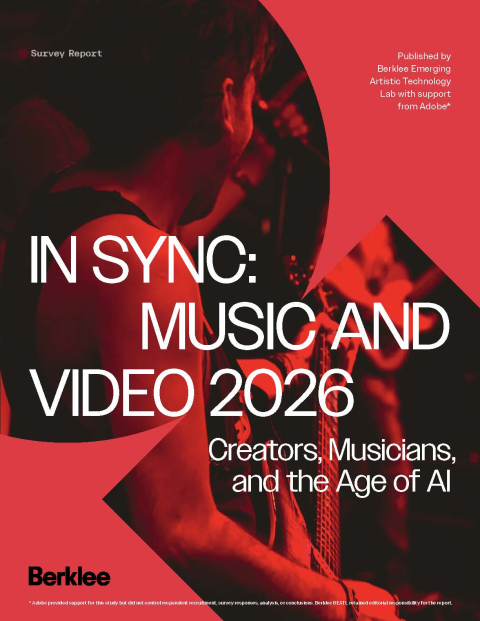
Led a national survey study in partnership with Berklee BEATL & Adobe to study AI use in the music industry.
How We Work
1. Initial consultation and plan
We meet to discuss your specific needs and confirm this is the right approach for the decision you're facing.
2. Project scoping and budget
You receive a custom scope of work with tasks, due dates, and budget before any work begins. Fixed scope, no hourly surprises.
3. Project execution
You receive updates on progress throughout, including recruitment status and fielding milestones.
4. A true partnership approach
We share insights with you as they come up throughout the project, so your team can start acting on what we learn long before the final report is finished.
5. Project completion
We deliver final insights in the format your team will actually use, whether that's a written report, an executive presentation, or a working session.
Frequently Asked Questions
-
It's independent assessment of the vendors an organization is considering, conducted by a third party with no financial relationship with any of them. It usually covers capability comparison against criteria you set, research with actual users, review of the evidence behind effectiveness claims, and total cost analysis.
-
Procurement teams manage the process, the compliance requirements, and the contract. What they generally can't do is run independent user research, interview customers the vendor didn't select, or assess whether a research claim is methodologically sound. We handle those and hand the findings to your process.
-
No. We take no fees, referral arrangements, or partnerships from any vendor we evaluate. Our only compensation comes from the organization commissioning the evaluation.
-
Four to eight weeks for most evaluations. Timeline depends on how many vendors are in scope, whether user research is included, and how quickly reference interviews can be scheduled.
-
It depends on how many vendors are being evaluated, whether the work includes user research and reference interviews, and the depth of documentation your process requires. We provide a fixed-scope quote after an initial consultation. For most large procurements the evaluation costs a small fraction of the contract being decided.
-
Three to five is the practical range for a thorough evaluation. Beyond that the work spreads thin and the comparison gets shallower. If your longlist is larger, we can run a lighter screen first to narrow it before the detailed evaluation begins.
-
Yes. This is a common request from districts and states, since many edtech products cite research whose design doesn't support the claim being made or doesn't meet the evidence tier a funding source requires. We assess the study design behind the claim and tell you what it actually establishes.
-
Yes, and it's usually the most valuable part. Vendor-supplied references are selected for being enthusiastic. We identify current and former customers independently, and the former customers in particular tend to be candid about what went wrong.
-
We can help develop the evaluation criteria and the questions that make responses comparable. We work alongside your procurement office, which owns the RFP process itself.
-
That's common and it's worth knowing early. We evaluate against the criteria regardless, and if the evidence supports the preferred vendor, the evaluation documents why, and that documentation is useful to a board. If it doesn't, you've learned that while you can still change course.
Our Experience
More than 60 studies designed, including case study, quasi-experimental, RCT, and mixed-method designs
More than 100 focus groups and in-depth interviews conducted
More than $4 million in grant-funded research managed
Clients spanning Fortune 500 companies, startups, nonprofits, universities, and federally funded programs
Our researchers hold doctorates in educational neuroscience, psychology, and related fields
Making a decision that has to hold up?
Tell us what you're evaluating and who has to approve it. We'll advise on scope and what the evaluation would need to include.