Brand Perception and Awareness Studies
A brand perception study measures what people actually think of your brand, and an awareness study measures how many of them have heard of you at all. Praxia Insights runs both, so you can see the gap between how you describe yourself and how the market describes you.
Every company has a story about what its brand stands for, and that story usually got written in a room by people who work there. What customers and prospects believe about you is a separate thing, and the two can drift a long way apart without anybody noticing.
You'll usually find out by accident. Somebody on a sales call describes you as the expensive option when you thought you were the premium one, or a prospect assumes you only serve enterprise clients when half your business is mid-market.
A brand study measures that properly, so you find out what people actually think, how many of them have heard of you, and what they'd say about you to somebody else.
Discuss your brand study
What These Studies Measure
Awareness
How many people in your target market have heard of you at all, both unaided, meaning they name you without prompting, and aided, meaning they recognize you from a list. The gap between those two numbers tells you a lot about how well your name is sticking.
Consideration and preference
Whether people would consider buying from you, and where you fall if they're weighing several options.
Perception and associations
What comes to mind when people think of you, in their own words, including the attributes they'd use to describe you and the ones they wouldn't.
Message and identity gap
How far your intended positioning has drifted from what people actually believe, and that gap is usually the finding that changes what you do next.
Positioning against competitors
How you're perceived next to the alternatives, including which competitor people think you're most like, and it's frequently not the one you'd have picked yourself.
Reputation drivers
What's shaping people's view of you, whether that's your website, your sales team, reviews, word of mouth, or something you didn't know was in play.
How We Run Them
We usually combine a survey with qualitative work, because each one answers a question the other can't.
The survey gives you numbers you can track over time, like what share of your market recognizes you and how you rank against named competitors. The interviews and focus groups tell you what's behind those numbers, in the words people actually use, and that's where the useful material for your marketing team comes from.
We'll also look at what people are already saying about you publicly, in reviews, on social media, and in your own website and content, so the study captures everything that's shaping people's view of you, including what they say when nobody's asking them.
Project Examples

A NIH-funded study examining neuropsychological predictors of adaptation after trauma.

A five-year randomized control trial (RCT), funded by the U.S. Department of Ed, to study individualized math instruction.
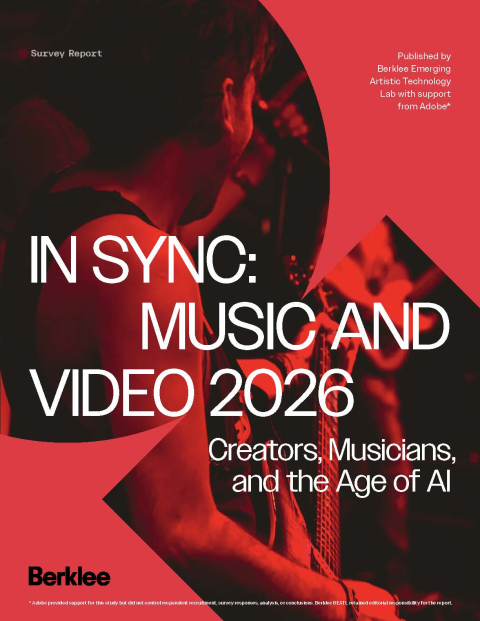
Led a national survey study in partnership with Berklee BEATL & Adobe to study AI use in the music industry.
How We Work
1. Initial consultation and plan
We meet to discuss your specific needs and confirm this is the right approach for the decision you're facing.
2. Project scoping and budget
You receive a custom scope of work with tasks, due dates, and budget before any work begins. Fixed scope, no hourly surprises.
3. Project execution
You receive updates on progress throughout, including recruitment status and fielding milestones.
4. A true partnership approach
We share insights with you as they come up throughout the project, so your team can start acting on what we learn long before the final report is finished.
5. Project completion
We deliver final insights in the format your team will actually use, whether that's a written report, an executive presentation, or a working session.
Frequently Asked Questions
-
It's research that measures what people believe about your brand, including the attributes they associate with you, how they'd describe you to somebody else, and how you compare to competitors in their minds. It's how you find out whether the way you talk about yourself matches the way the market sees you.
-
Awareness is whether people have heard of you at all. Perception is what they think once they have. You can have high awareness and poor perception, or excellent perception among a very small group of people, and those two situations need completely different responses.
-
For a general market read, a few hundred responses will give you numbers you can act on. If you want to compare segments or geographies, each one needs its own adequate sample, so the total goes up quickly. We'll size it during scoping based on how you plan to use the results.
-
Six to eight weeks for a study combining a survey with interviews or focus groups. A survey on its own can move faster, though you'll get numbers without much explanation of what's driving them.
-
It depends on the sample size, whether the study includes qualitative work, how hard your market is to reach, and incentive levels. A single-market survey costs the least, and a multi-segment study with focus groups costs the most. We'll give you a fixed-scope quote after an initial consultation.
-
Both, and the difference between them is often the most interesting part. Your customers already understand you, so their perception tells you about retention and advocacy. Non-customers tell you what's actually reaching the market, and that's what matters for growth.
-
Annually is a reasonable cadence for most organizations, and it works much better once you have a baseline to compare against. A single brand study tells you where you stand today, but the real value shows up the second time you run it and can see what moved.
-
That's normal, especially when the outcomes take longer than the grant period. The answer is usually to identify intermediate outcomes that are measurable inside your timeline and that the research says predict the longer-term change. Reviewers accept that when the reasoning is stated clearly.
-
Most teams use them in three places. Marketing rewrites messaging to close the gap between intended and actual perception, sales adjusts how they handle the comparisons buyers are actually making, and leadership uses the awareness numbers as a baseline to measure campaigns against.
-
Yes, and it's a common request. We've run studies where participants reviewed a company's website and social content directly and gave their reactions, with the findings used to rebuild both.
Our Experience
More than 60 studies designed, including case study, quasi-experimental, RCT, and mixed-method designs
More than 100 focus groups and in-depth interviews conducted
More than $4 million in grant-funded research managed
Clients spanning Fortune 500 companies, startups, nonprofits, universities, and federally funded programs
Our researchers hold doctorates in educational neuroscience, psychology, and related fields
Want to know what people actually think of you?
Tell us who your market is and what you're trying to find out, and we'll advise on the right approach and what it would take.