
Research for Nonprofits
Praxia Insights provides research and evaluation for nonprofit organizations, including needs assessments, program evaluation, external evaluation for grant-funded work, stakeholder and community research, and the reporting that funders and boards ask for.
Nonprofits get asked for evidence constantly, and usually by people holding the money. Funders want outcomes, boards want to know the programs are working, and applications want proof that the need is real before anybody writes a check.
Most organizations don't have a researcher on staff, so this work lands on a program director who already has a full job. It gets done at midnight, it gets done well enough to submit, and nobody involved is happy about it
We do that part. Our team has managed more than $4 million in grant-funded research, and we've worked under Department of Education, NIH, and foundation funding, so we know what these reports have to withstand.
Discuss what your organization needs
What Nonprofits Come to Us For
Grant applications: needs assessments, literature reviews, evaluation plans, logic models, and an external evaluator named in the proposal.
Program evaluation: finding out whether a program is working, for whom, and what to change while there's still time.
External evaluation: independent evaluation on federally funded and foundation-funded work, which most funders require.
Community and stakeholder research: hearing directly from the people you serve, your partners, your staff, and your board.
Donor and funder reporting: annual reports, donor impact reports, and outcome reporting that people actually read.
Measurement infrastructure: setting up outcome tracking your team can run yourselves after we're gone.
What Makes Nonprofit Research Different
The constraints are real and they shape the work. Budgets are tighter, timelines are set by grant deadlines you don't control, and the people you serve are frequently harder to reach than a consumer panel and deserve more care in how they're approached
There's also more at stake in getting the answer right. A company that misreads its market loses money, and a nonprofit that misreads its community fails people who were counting on it.
So we scope to what you can actually afford, we work to grant calendars, and we're careful about how community members are recruited, compensated, and represented in what gets published.
Working With Funders
Our team has worked under Department of Education, NIH, and foundation funding, including a $3.75 million Education Innovation and Research randomized controlled trial where our team served as Project Lead, conducted in partnership with the American Institutes for Research, and education program evaluation under a Schusterman Family Foundation grant.
That matters mostly because we know what funder reporting has to look like. Different agencies expect different formats, different evidence standards, and different reporting calendars, and getting that wrong creates problems for you that have nothing to do with how good your program is.
Project Examples
A NIH-funded study examining neuropsychological predictors of adaptation after trauma.

A five-year randomized control trial (RCT), funded by the U.S. Department of Ed, to study individualized math instruction.
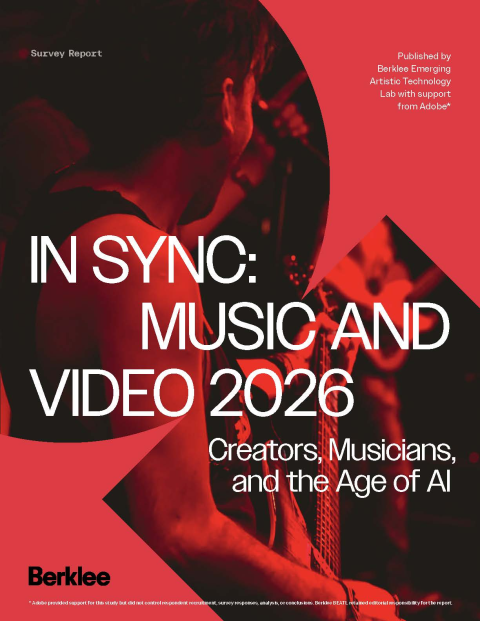
Led a national survey study in partnership with Berklee BEATL & Adobe to study AI use in the music industry.
How We Work
1. Initial consultation and plan
We'll meet to talk through what you need and confirm that this is the right approach for the decision you're facing.
2. Project scoping and budget
You'll get a custom scope of work with tasks, due dates, and budget before any work starts, so the price is fixed and there aren't hourly surprises later.
3. Project execution
You'll get updates on progress throughout, including where recruitment stands and when each milestone is hit.
4. A true partnership approach
We share insights with you as they come up throughout the project, so your team can start acting on what we learn long before the final report is finished.
5. Project completion
We'll deliver the final insights in whatever format your team will actually use, whether that's a written report, an executive presentation, or a working session.
Frequently Asked Questions
-
Usually, yes. Tell us your budget and what you need to answer, and we'll tell you what's achievable inside it. Sometimes that means a narrower study, and sometimes it means starting with existing data before spending anything on new collection. We'd rather scope something honest than take on work we can't do properly.
-
Yes. We serve as external evaluator on federally funded and foundation-funded programs, and we can be named in your application with a letter of commitment before you submit.
-
Evaluation is commonly budgeted at roughly five to ten percent of total program cost. Designs requiring randomization or data collection across several years cost more. We'll help you scope a defensible number before you submit, so the evaluation you promised is actually funded.
-
We write the research and evidence sections, including the needs assessment, literature review, evaluation plan, and logic model. We don't write full proposals, and we work alongside grant writers regularly.
-
That's a common place to be. We can analyze whatever you already collect, run a survey of participants to fill the gap, and set up outcome measurement you can repeat next year. We'll also tell you honestly what you can claim with what you have now.
-
Yes, and funders increasingly expect it. Community research needs care with recruitment, incentives, language access, and trust, and we handle all of it. We'll usually work through your existing relationships where that's the right way in.
-
We report what we found. Funders and boards are generally good at spotting an evaluation that overstates results, and doing that damages your credibility for every report afterward. Findings showing a program works for some people and not others are common, and they're usually more useful than a flat positive, because they tell you what to change.
-
Yes. Some organizations want us to run everything, and others want to build internal capacity over time. We can build training and documentation into the project so your team can carry more of it next year.
-
Both. We work with organizations from small community nonprofits through national initiatives, and the approach changes with the scale and the budget.
-
It depends on what's already in progress, so tell us your deadline early. Grant deadlines are the most common reason for a rush, and four to six weeks of lead time makes a real difference to what we can produce.
Our Experience
More than 60 studies designed, including case study, quasi-experimental, RCT, and mixed-method designs
More than 100 focus groups and in-depth interviews conducted
More than $4 million in grant-funded research managed
Clients spanning Fortune 500 companies, startups, nonprofits, universities, and federally funded programs
Our researchers hold doctorates in educational neuroscience, psychology, and related fields
Need research or evaluation for your organization?
Tell us what you're working on, what the funder is asking for, and your timeline. We'll advise on what you need and what it would take.