
Needs Assessment Research
A needs assessment is research that documents what a community, workforce, or population actually needs, so a program or proposal is built on evidence instead of assumption. Praxia Insights runs needs assessments for nonprofits, schools, districts, health organizations, and grant applicants.
Funders have gotten much stricter about this. It's no longer enough to say that a need exists in your community, because reviewers want to see how you know, where the data came from, and whether you asked the people affected.
That's the difference between an assumption-based proposal and an evidence-based one, and it's frequently the difference between getting funded and not. It also matters after the award, because a program designed around a need nobody verified tends to serve fewer people than anybody expected.
We'll document the need properly. That means public data where it exists, primary research where it doesn't, and the voices of the people the program is meant to serve.
Discuss your needs assessment
When You Need One
You're applying for funding: most competitive applications require documented evidence of need, and reviewers score it.
You're designing a new program: you want to build around what people actually need instead of what you assume they need.
You're expanding to a new area or population: what's true in one community often isn't true in the next one over.
Your board or funder is asking: somebody wants to know whether the need you're serving is still the need that exists.
Your program isn't reaching people: enrollment is below plan and it's worth checking whether the need was where you thought it was.
What a Needs Assessment Covers
The problem itself
What the need actually is, described specifically, with data showing its size and severity in the specific population you serve, using local figures wherever they exist.
Barriers
Why people who need help aren't currently getting it. That's often about access, cost, awareness, trust, or transportation, and much less often about a shortage of services.
Who's affected
Which groups experience the need, how it differs between them, and who's experiencing it most acutely. Averages hide a lot here.
What people say they need
Direct input from the people the program would serve, through surveys, interviews, or focus groups. Funders increasingly require this and it regularly changes the program design.
What already exists
What services, programs, and resources are already available, who they reach, and where the gaps are. Funders want to know you're not duplicating something down the road.
Priorities
Which needs are most urgent and most addressable given what you can actually do, so the assessment leads somewhere instead of just describing a situation.
How We Gather the Evidence
We start with what already exists. Census data, state and district figures, health and service statistics, and prior local studies can establish a lot, and it's free.
Then we fill the gaps with primary research. That usually means surveys of the affected population, interviews with people who provide or receive services, and focus groups where a conversation gets you further than a questionnaire would.
We'll recruit participants, handle scheduling and incentives, and run the sessions. Reaching people who are hard to reach is the part that most often stalls a needs assessment, and it's the part we're strongest at.
Project Examples
A NIH-funded study examining neuropsychological predictors of adaptation after trauma.

A five-year randomized control trial (RCT), funded by the U.S. Department of Ed, to study individualized math instruction.
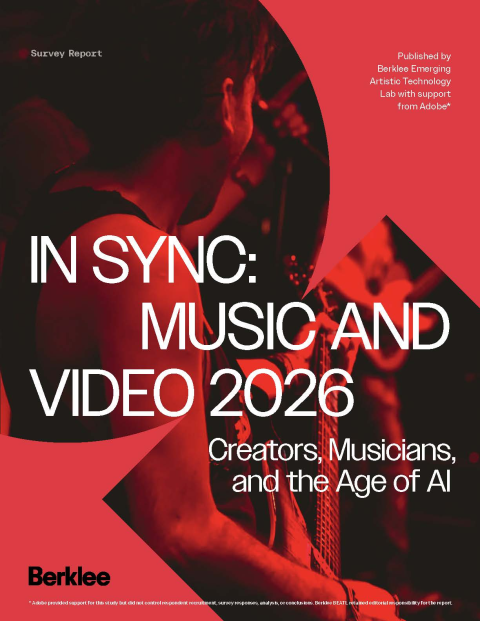
Led a national survey study in partnership with Berklee BEATL & Adobe to study AI use in the music industry.
How We Work
1. Initial consultation and plan
We'll meet to talk through what you need and confirm that this is the right approach for the decision you're facing.
2. Project scoping and budget
You'll get a custom scope of work with tasks, due dates, and budget before any work starts, so the price is fixed and there aren't hourly surprises later.
3. Project execution
You'll get updates on progress throughout, including where recruitment stands and when each milestone is hit.
4. A true partnership approach
We share insights with you as they come up throughout the project, so your team can start acting on what we learn long before the final report is finished.
5. Project completion
We'll deliver the final insights in whatever format your team will actually use, whether that's a written report, an executive presentation, or a working session.
Frequently Asked Questions
-
It's research that documents what a community or population actually needs, how severe the need is, who it affects most, and what's already being done about it. It's how an organization shows a funder that a problem is real, and how it designs a program around evidence instead of assumption.
-
Six to twelve weeks for most assessments. If it can be built largely from existing public data, it moves faster. If it needs surveys or community focus groups, plan for the longer end, because recruiting people takes time.
-
It depends on how much can come from existing data, how much primary research is needed, how hard the population is to reach, and whether incentives are involved. An assessment built from public data costs the least, and one with substantial community data collection costs the most. We'll give you a fixed-scope quote after an initial consultation.
-
Sometimes, and it depends on your funder and your question. Public data can establish that a need exists at a population level. What it can't tell you is why people aren't getting help, and that usually requires talking to them. Many funders now expect that community input to be there.
-
Tell us the date and we'll tell you honestly. A rapid assessment built from existing data can be done in a few weeks with its limitations stated clearly. What we won't do is promise community data collection in a timeline that can't accommodate it.
-
Yes, and it's usually the most valuable part. Community and participant research needs care with recruitment, scheduling, incentives, language access, and trust, and we handle all of it. We'll also work through your existing partners where that's the right way in.
-
We build to the funder's stated requirements, so send us the solicitation. Different programs ask for different things, and some publish a required structure. If yours does, we'll follow it.
-
That happens, and it's the point. Finding out at the assessment stage that the need is somewhere else, or that people simply can't get to the service, is much better than finding out two years into a program that isn't working.
-
Yes, and it should. The needs assessment establishes the problem, the logic model shows how your program addresses it, and the evaluation plan tests whether it did. They work best when the same people build all three, because the pieces actually line up.
-
Every three to five years for most organizations, or sooner if your community has changed significantly. Populations move, services open and close, and an assessment built on data from before a major local change won't hold up with a funder.
Our Experience
More than 60 studies designed, including case study, quasi-experimental, RCT, and mixed-method designs
More than 100 focus groups and in-depth interviews conducted
More than $4 million in grant-funded research managed
Clients spanning Fortune 500 companies, startups, nonprofits, universities, and federally funded programs
Our researchers hold doctorates in educational neuroscience, psychology, and related fields
Need to document the need?
Tell us about the population you serve and what the funder is asking for, and we'll advise on scope and what it would take.