
Pitch-Ready Slide Decks
A pitch-ready deck presents research findings to an audience who will ask hard questions, whether that's investors, a board, or a funder. Praxia Insights builds decks from research we ran or from data you already have, designed to be presented out loud and to hold up when somebody asks how you know.
Most decks built from research go wrong the same way. Somebody takes the report, pulls the charts out of it, drops them onto slides, and ends up with twenty pages that nobody can present, because every one of them needs three minutes of explanation before it makes any sense.
A deck works much better when you build it around the audience instead of around the report. You start by working out what these particular people need to believe, what they're likely to push back on, and how much time you'll really have, and then you decide which findings are worth a slide of their own.
That's what we'll build for you, and we'll put the supporting detail behind it so you can answer a follow-up question without losing your place.
Discuss your deck

Decks We Build
Investor decks
Market sizing, competitive positioning, and product-market fit evidence, presented so an investor can follow the reasoning. Investors rarely challenge a number itself, and they will challenge how you got it, so the method has to be visible.
Funder and board decks
Market sizing, competitive positioning, and product-market fit evidence, presented so an investor can follow the reasoning. Investors rarely challenge a number itself, and they will challenge how you got it, so the method has to be visible.
Executive and leadership decks
Research findings framed around the decision your leadership team has to make, with the recommendation up front instead of buried on slide fourteen.
Sales and client-facing decks
Research your team can put in front of a prospect, including original findings that give your salespeople something to say beyond a product description.
Sales and client-facing decks
Research your team can put in front of a prospect, including original findings that give your salespeople something to say beyond a product description.
Conference and public presentations
Decks for practitioner audiences and academic conferences, built to be presented out loud instead of read off a screen afterward.
What Makes a Deck Survive Questions
The difference between a deck that lands and one that falls apart is usually what's underneath it.
Every number needs a source somebody can check, every claim needs a method behind it, and the assumptions have to be written on the slide instead of held in the presenter's memory. If somebody asks where a figure came from and you can't tell them, the whole deck loses credibility, and that includes the parts that were solid.
We build the appendix alongside the deck, so you'll have the detail on hand for the questions that come up without it cluttering the slides you're presenting from.
Funder-facing deck for a leadership assessment tool
For a client developing a leadership assessment product, we researched the competitive landscape and positioning, sized the market including TAM, SAM, and SOM, and analyzed the pricing approach, then built the findings into a funder-facing slide deck designed to withstand questioning.
Working From What You Have
You don't need us to have run the research. Send us a report, a spreadsheet, survey results, or a half-finished deck, and we'll turn it into something presentable.
We'll also tell you honestly what your data supports. If a slide is making a claim the numbers can't carry, it's much better to hear that from us than from an investor.
Project Examples

A NIH-funded study examining neuropsychological predictors of adaptation after trauma.

A five-year randomized control trial (RCT), funded by the U.S. Department of Ed, to study individualized math instruction.
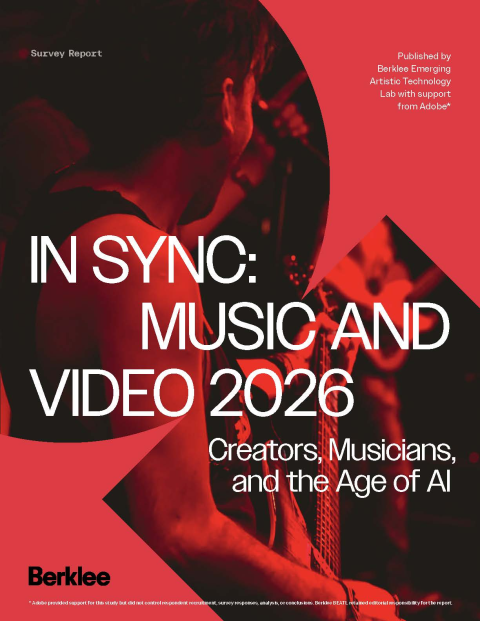
Led a national survey study in partnership with Berklee BEATL & Adobe to study AI use in the music industry.
How We Work
1. Initial consultation and plan
We meet to discuss your specific needs and confirm this is the right approach for the decision you're facing.
2. Project scoping and budget
You receive a custom scope of work with tasks, due dates, and budget before any work begins. Fixed scope, no hourly surprises.
3. Project execution
You receive updates on progress throughout, including recruitment status and fielding milestones.
4. A true partnership approach
We share insights with you as they come up throughout the project, so your team can start acting on what we learn long before the final report is finished.
5. Project completion
We deliver final insights in the format your team will actually use, whether that's a written report, an executive presentation, or a working session.
Frequently Asked Questions
-
Yes, and it's a common request. Send us the report, the data, or whatever draft exists, and we'll build the deck. We'll tell you what the underlying evidence supports and flag anything that would fall apart under a follow-up question.
-
Fewer than you think. Ten to fifteen is plenty for most presentations, with an appendix behind it for the detail. Long decks are usually a sign that nobody decided what the audience actually needed to hear.
-
Two to four weeks for most decks, depending on whether analysis is included and how much design is involved. If the analysis is done and you just need the deck built, it can be faster.
-
It depends on whether research or analysis is part of the work, the number of slides, and how much design you want. Building from a finished analysis costs the least, and a deck including new research and full design costs the most. We'll give you a fixed-scope quote after an initial consultation.
-
Yes. Send us your template and brand guidelines and we'll build to them. If you don't have one, we'll design something clean that works for the audience.
-
Yes. We'll walk you through the deck, talk through the questions most likely to come up, and help you decide what to say when somebody challenges a number. Knowing the answer to the hard question in advance is most of what makes a presentation go well.
-
Sometimes, and it depends on the setting. For funder and board presentations, having the researcher in the room to answer methodological questions can help. For investor pitches, the founder should be the one presenting and we'll prepare you for it.
-
We'll tell you before the deck is built. A deck that overstates what the evidence shows is a real liability with investors and funders, who tend to probe exactly the claim that isn't supported. We'll help you find the story your evidence does support, and it's frequently stronger than you expected.
-
Yes, and we'd recommend it. The appendix is what lets you answer a detailed question without derailing the presentation, and it's where the methodology, source documentation, and supporting analysis belong.
-
Yes. Conference decks work differently from board decks, since the audience came to learn instead of to decide, and the pacing and level of detail change accordingly.
Our Experience
More than 60 studies designed, including case study, quasi-experimental, RCT, and mixed-method designs
More than 100 focus groups and in-depth interviews conducted
More than $4 million in grant-funded research managed
Clients spanning Fortune 500 companies, startups, nonprofits, universities, and federally funded programs
Our researchers hold doctorates in educational neuroscience, psychology, and related fields
Need a deck that holds up?
Tell us who you're presenting to and what you need them to walk away believing, and we'll advise on what it would take.