
Longitudinal and Tracking Studies
A longitudinal study follows the same people over time to see how things change, and a tracking study measures the same questions at regular intervals to see how a population shifts. Praxia Insights designs and runs both, for organizations that need to know whether something is actually moving.
A single study gives you a snapshot. That's enough for a great many decisions, and it's useless for the ones where the question is whether something changed.
You can't tell from one measurement whether your brand awareness is growing, whether program participants improved, or whether the problem you're addressing is getting better or worse. You need at least two points, and usually more than that, measured the same way each time.
The hard part is consistency. A tracking study only works if the questions, the sample, and the method stay stable, because if you change how you measure it, you can no longer tell whether the change you're seeing is real.
Discuss your tracking study
The Difference Between Them
Longitudinal studies
The same individuals are followed over time, so you can see how each person changed and what predicted it. This is what you need for program outcomes, developmental questions, and anything where individual trajectories matter. It's harder to run because people drop out, and keeping them engaged is most of the work.
Tracking studies
The same questions are asked of a fresh sample at each wave, so you see how the population is shifting even though you're not following the same people. This is the usual choice for brand awareness, satisfaction, and market perception, and it's much easier to sustain.
Which one you need depends on whether your question is about people changing or about a population changing, and we'll help you work that out before anything is designed.
What We Handle
Design and baseline
Setting the questions, the sample, and the intervals, and running the first wave. The baseline matters more than anything after it, because every future comparison depends on getting it right.
Wave-by-wave fielding
Running each round on schedule, including recruitment where a tracking study needs a fresh sample each time.
Instrument consistency
Keeping the measures stable across waves, and managing the situations where a measure has to change, so you know which comparisons still hold.
Change analysis
Analyzing what actually moved, whether the movement is real or within the range you'd expect from sampling, and what's driving it.
Panel management and retention
For longitudinal work, keeping participants engaged across waves through reminders, incentives, and contact that doesn't feel like harassment, since attrition is what usually ends these studies early.
Reporting over time
Reporting built so each wave adds to the picture, including dashboards where you want to watch the numbers between formal reports.
Explaining the Results
Analysis that nobody can interpret has no value, and this is where a lot of statistical work falls down. A report full of coefficients and p-values gets forwarded around and quietly ignored.
We write results for the people who have to use them. That means saying what was found in plain language, what it means for the decision at hand, and how confident anybody should be about it, with the technical detail available in an appendix for whoever wants to check it.
We'll also tell you when the analysis doesn't support the claim somebody was hoping to make. That conversation is easier before a report goes to a funder than after.
Project Examples

A NIH-funded study examining neuropsychological predictors of adaptation after trauma.

A five-year randomized control trial (RCT), funded by the U.S. Department of Ed, to study individualized math instruction.
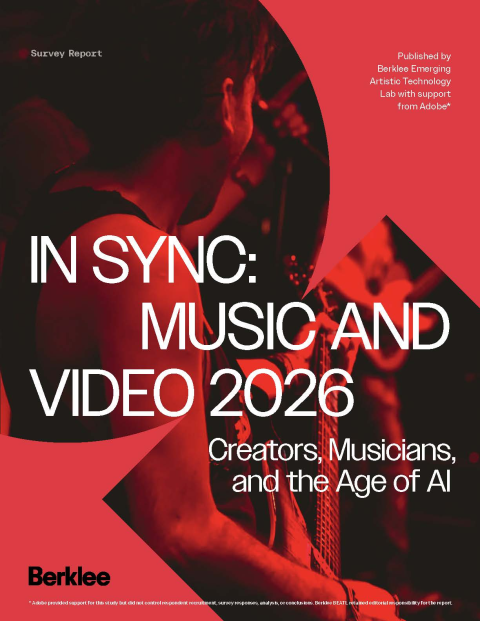
Led a national survey study in partnership with Berklee BEATL & Adobe to study AI use in the music industry.
How We Work
1. Initial consultation and plan
We meet to discuss your specific needs and confirm this is the right approach for the decision you're facing.
2. Project scoping and budget
You receive a custom scope of work with tasks, due dates, and budget before any work begins. Fixed scope, no hourly surprises.
3. Project execution
You receive updates on progress throughout, including recruitment status and fielding milestones.
4. A true partnership approach
We share insights with you as they come up throughout the project, so your team can start acting on what we learn long before the final report is finished.
5. Project completion
We deliver final insights in the format your team will actually use, whether that's a written report, an executive presentation, or a working session.
Frequently Asked Questions
-
A longitudinal study follows the same individuals over time, so you can see how each person changed. A tracking study asks the same questions of a fresh sample at each round, so you see how the population is shifting. Longitudinal is right for outcomes and development, and tracking is right for awareness, satisfaction, and market perception.
-
It depends on how fast the thing you're measuring actually moves. Brand awareness changes slowly, so annual or semiannual is usually right. Program outcomes follow the program cycle. Measuring more often than the underlying thing changes just produces noise and costs money.
-
At minimum two, and three or more before you can distinguish a trend from a fluctuation. Two points tell you something changed, and they can't tell you whether it's a pattern or a blip.
-
It's usually quoted per wave, with the first wave costing more because that's where the design and instrument work happens. Later waves cost less since the instrument already exists. We'll give you a fixed-scope quote covering the design plus a per-wave rate.
-
Through incentives set at a level that reflects the ongoing commitment, contact between waves that keeps people warm without annoying them, and making participation as easy as possible. Some attrition is inevitable, so we over-recruit at baseline to account for it.
-
You can add questions freely. Changing existing ones breaks comparability, so anything you alter can't be compared back to earlier waves. If a change is genuinely necessary, we'll run both versions for one wave so there's a bridge between them.
-
Yes, and it happens fairly often. Send us the previous instruments and data, and we'll tell you what's comparable and what isn't before we field the next wave. Sometimes there are more breaks in the series than anybody realized.
-
By testing it. A two-point movement between waves is frequently within the range you'd expect from sampling alone, and reporting it as a change would be wrong. We report which movements are statistically meaningful and which aren't, so nobody builds a strategy on noise.
-
Yes. Tracking data works well in a dashboard, since the whole point is watching numbers across time. We can build it in Power BI, Tableau, Looker Studio, your CRM, or in Excel and Google Sheets.
-
It can be, if you keep it small. A short annual survey run consistently is more useful than a large study run once, because the comparison is where the value is. We'll scope something you can actually sustain, since a tracking study you abandon after one wave is just an expensive snapshot.
Our Experience
More than 60 studies designed, including case study, quasi-experimental, RCT, and mixed-method designs
More than 100 focus groups and in-depth interviews conducted
More than $4 million in grant-funded research managed
Clients spanning Fortune 500 companies, startups, nonprofits, universities, and federally funded programs
Our researchers hold doctorates in educational neuroscience, psychology, and related fields
Need to know whether something is actually changing?
Tell us what you want to track and how often, and we'll advise on design, cadence, and what it would take.