
Funnel and Conversion Research
Funnel research finds out why people drop out of your sales or signup process, using research with real prospects instead of guesswork. Praxia Insights combines analytics with customer interviews, usability testing, diary studies, and message testing, so you know why the funnel leaks and not just where.
Your analytics can tell you that 68% of people leave on the pricing page. What they can't tell you is why, and that's the part you need in order to fix anything.
So teams guess. Somebody thinks it's the price, somebody thinks it's the form, somebody thinks the page is too long, and the next three months go into changes based on whoever argued hardest, and sometimes that works without anybody understanding why.
Research closes that gap. You watch real prospects go through your funnel, you ask them what they were thinking when they left, and the answer is usually something nobody in the room had suggested.
Discuss your funnel research
What We Find Out
Where people actually drop: from your analytics, cleaned up and segmented so the numbers mean something.
Why they drop: from talking to the people who left, and that's the part analytics can't give you.
What confused them: the moments where somebody stopped understanding what they were being asked to do.
What they expected instead: the mismatch between what your page promised and what came next.
What almost stopped the ones who converted: the people who bought had doubts too, and theirs are easier to hear.
Which fix matters most: because a funnel usually has several problems and you can't do all of them at once.
How We Research a Funnel
Analytics review
We'll start with what you already have, cleaning it up and segmenting it so you know where the drop-offs really are. Aggregate numbers hide a lot, and a funnel that looks fine overall is frequently broken for one segment.
Interviews with people who dropped
Conversations with prospects who started and didn't finish. They'll usually tell an outside researcher what happened, and it's rarely what your team assumed.
Usability testing
Real people attempt to sign up or buy while we watch. Watching somebody fail at your checkout is a faster way to find the problem than any amount of internal debate about it.
Message and page testing
Testing what your copy actually communicates, since a lot of funnel problems are people misunderstanding what they're being offered.
Diary studies
For funnels that unfold over days or weeks, participants record what they're thinking at each step as it happens, so you get the whole journey instead of a summary from memory.
Prioritized recommendations
What to change first, based on how many people it affects and how badly, so your team isn't choosing between twelve fixes with no ranking.
A Diary Study of a Sales Funnel
We use AI to accelerate the work, because pattern extraction across hundreds or thousands of posts is exactly what it's good at. Every piece of that is then reviewed by a researcher and complemented by human desk research, because AI will confidently report a theme that isn't there and miss one that is.
What you get back is themes ranked by how often they came up, with the actual quotes attached, plus a clear account of what changed over the period and what the gaps are between your category's complaints and anybody's marketing.
We'll also tell you honestly when the volume isn't there. Some categories have very little public conversation, and in that case a survey or interviews would serve you better.
Project Examples

A NIH-funded study examining neuropsychological predictors of adaptation after trauma.

A five-year randomized control trial (RCT), funded by the U.S. Department of Ed, to study individualized math instruction.
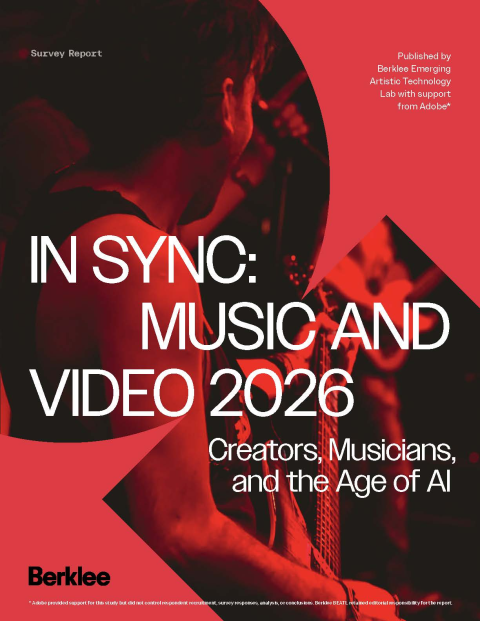
Led a national survey study in partnership with Berklee BEATL & Adobe to study AI use in the music industry.
How We Work
1. Initial consultation and plan
We meet to discuss your specific needs and confirm this is the right approach for the decision you're facing.
2. Project scoping and budget
You receive a custom scope of work with tasks, due dates, and budget before any work begins. Fixed scope, no hourly surprises.
3. Project execution
You receive updates on progress throughout, including recruitment status and fielding milestones.
4. A true partnership approach
We share insights with you as they come up throughout the project, so your team can start acting on what we learn long before the final report is finished.
5. Project completion
We deliver final insights in the format your team will actually use, whether that's a written report, an executive presentation, or a working session.
Frequently Asked Questions
-
It's research into why people drop out of a sales, signup, or conversion process. Analytics tell you where people leave, and funnel research tells you why, using interviews, usability testing, diary studies, and message testing with real prospects.
-
Conversion optimization usually means testing variations to see which performs better, and it works when you already know what to test. Funnel research is how you find out what's worth testing in the first place, and it's much faster than working through hypotheses one A/B test at a time.
-
Four to six weeks for most projects. Studies including a diary component take longer, since participants need days or weeks to actually go through the funnel.
-
It depends on the methods, the number of participants, and how hard your prospects are to recruit. An analytics review with a small number of usability sessions costs the least, and a multi-method study with a diary component costs the most. We'll give you a fixed-scope quote after an initial consultation.
-
Yes, and it's the most useful conversation available. If you can give us contacts for people who started and didn't finish, we'll reach out as an independent researcher. Plenty of them will explain exactly what happened, and they're candid because they don't work for you and aren't trying to buy anything.
-
Often more so. Low traffic means A/B testing won't reach significance in any reasonable timeframe, so qualitative research is the only option that actually tells you anything. Eight usability sessions will find problems that a year of split testing would never turn up.
-
It helps a lot, and we can work without it. Access lets us segment the drop-off properly and target the research at the right stage. If you'd rather not grant access, exported reports work too.
-
Yes. Message testing with real buyers tells you what people understood you to be offering, and it's frequently not what you meant. We've also run focus groups with buyers reviewing a company's website and sales funnel directly, with the findings used to rebuild both.
-
A written report covering where people drop, why, and what to change, with the fixes ranked by impact. Most teams also want a working session where we walk through the findings with the people who'll implement them.
-
Yes. Once changes are live, we can run a follow-up round of usability sessions or a fresh analytics review to confirm the problem is actually solved instead of moved.
Our Experience
More than 60 studies designed, including case study, quasi-experimental, RCT, and mixed-method designs
More than 100 focus groups and in-depth interviews conducted
More than $4 million in grant-funded research managed
Clients spanning Fortune 500 companies, startups, nonprofits, universities, and federally funded programs
Our researchers hold doctorates in educational neuroscience, psychology, and related fields
Want to know why your funnel leaks?
Tell us where you're losing people and what you've already tried, and we'll advise on the research that would explain it.