
Research for EdTech Companies
Praxia Insights runs research for education technology companies, including efficacy studies that meet ESSA evidence requirements, teacher and student research, market and competitive analysis, and product research with the educators who actually use your tool.
EdTech has a particular problem. Districts increasingly won't buy without evidence, funding sources attach evidence tiers to purchases, and the studies that satisfy those requirements have to be done by somebody who isn't you.
There's also a gap between what a product does in a demo and what happens when a teacher uses it in a real classroom in March. Closing that gap takes research in actual schools, and getting into actual schools is its own skill.
Our team has worked with K-12 schools and districts across all 50 states and internationally, served as Project Lead on a $3.75 million Department of Education EIR randomized controlled trial conducted with the American Institutes for Research, and evaluated a blended instructional model with Johns Hopkins CRRE.
Discuss your edtech research
What We Work On
Efficacy studies: research designed to meet the evidence standard your buyers or their funding sources require.
Teacher and student research: interviews, surveys, and observation with the people actually using the product day to day.
Product and usability research: testing features and prototypes with educators before you build or launch.
Market and competitive research: market sizing, competitor positioning, pricing, and what districts actually weigh when they buy.
Buyer research: understanding how district and school purchase decisions really get made, and who has to sign off.
Implementation studies: finding out how your product gets used in practice, which frequently isn't how it was designed to be used.
Evidence Requirements
This is where most edtech companies get stuck. A district asks whether your product is evidence-based, and the honest answer is complicated.
Under ESSA, evidence is organized into tiers, and each one requires a different study design. A logic model with a rationale is one thing, and a randomized controlled trial showing a statistically significant effect is a very different thing, and the tier you can claim depends entirely on what was actually studied and how.
There's also the What Works Clearinghouse, which reviews education research against its own standards and rates whether a study meets them with or without reservations. A district or a state may ask whether your evidence would hold up to that review, and the answer depends on things like attrition, baseline equivalence, and how the comparison group was formed.
We'll tell you which tier your existing evidence supports, whether it would stand up to a What Works Clearinghouse review, and what a study would need to look like to reach the next tier. If you've been told your product qualifies for something it doesn't, it's better to know that now.
Getting Into Schools
Research in schools has its own rules, and most of them aren't written down anywhere you can find them.
District research approval takes weeks or months depending on the district. Consent and assent for student participation take longer than anybody plans for. And a study designed to start in October and finish in November has never met a school calendar.
Having run research with districts in all 50 states, we know what a district will agree to, how far ahead to start, and how to design a study that a principal can actually accommodate.
Project Examples
A NIH-funded study examining neuropsychological predictors of adaptation after trauma.

A five-year randomized control trial (RCT), funded by the U.S. Department of Ed, to study individualized math instruction.
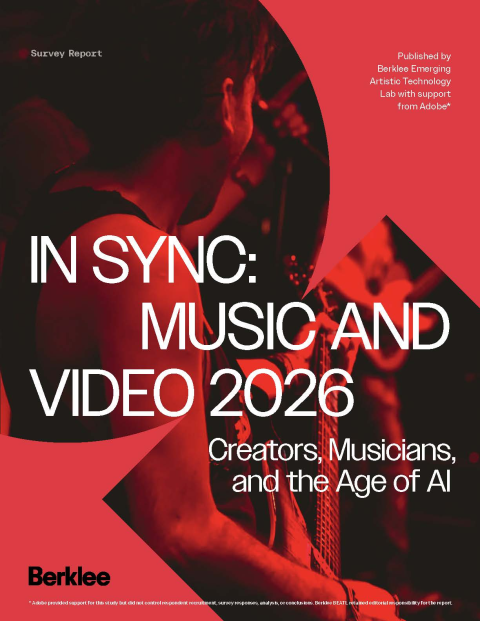
Led a national survey study in partnership with Berklee BEATL & Adobe to study AI use in the music industry.
How We Work
1. Initial consultation and plan
We'll meet to talk through what you need and confirm that this is the right approach for the decision you're facing.
2. Project scoping and budget
You'll get a custom scope of work with tasks, due dates, and budget before any work starts, so the price is fixed and there aren't hourly surprises later.
3. Project execution
You'll get updates on progress throughout, including where recruitment stands and when each milestone is hit.
4. A true partnership approach
We share insights with you as they come up throughout the project, so your team can start acting on what we learn long before the final report is finished.
5. Project completion
We'll deliver the final insights in whatever format your team will actually use, whether that's a written report, an executive presentation, or a working session.
Frequently Asked Questions
-
It varies by district and by funding source, and many now ask where a product falls in the ESSA evidence tiers. Tier four requires a demonstrated rationale like a logic model, and the higher tiers require correlational, quasi-experimental, or randomized studies showing an effect. The tier you can claim depends on what's actually been studied.
-
Yes. We design and conduct efficacy research including quasi-experimental designs and randomized controlled trials, and our team served as Project Lead on a $3.75 million Department of Education EIR randomized controlled trial conducted in partnership with the American Institutes for Research.
-
Longer than most companies want. A study needing a full school year of implementation plus analysis and reporting runs at least eighteen months, and often longer once you account for district approval and recruiting schools. Smaller correlational or quasi-experimental studies can be done faster.
-
It depends heavily on the design. A logic model and rationale supporting a tier four claim costs a fraction of a multi-site randomized trial. We'll tell you what each tier would realistically require before you commit to anything.
-
Yes. Our team has worked with schools and districts across all 50 states and internationally, and school recruitment is a specific skill. It takes lead time and it takes understanding what a district gets out of participating, because they're not doing it as a favor.
-
Usually because a demo is run by somebody who knows the product, under ideal conditions, with nothing else going on. A classroom has thirty students, a schedule, and a teacher managing six other things. Implementation research is how you find out what actually happens and design around it.
-
Yes. Teacher interviews, surveys, and focus groups are standard work for us, and reaching teachers takes understanding when they're actually available. Recruiting for sessions during the school day rarely works, and compensating them properly matters.
-
Yes. District purchasing involves more people than most vendors realize, including curriculum staff, technology directors, principals, and sometimes the board. Buyer research tells you who actually decides, what they weigh, and where deals die.
-
The What Works Clearinghouse reviews education research against a published set of standards and rates whether a study meets them, meets them with reservations, or doesn't meet them. It matters because districts and states increasingly use it as a shortcut for deciding whether evidence is credible. A study can be perfectly reasonable and still fail review on attrition or baseline equivalence, so it's worth knowing where yours would land before somebody else checks.
-
Send it to us. We'll assess what the design actually supports and what a district or a funding source would accept, and tell you plainly whether the claim you've been making holds up. Sometimes the study is fine and the claim was overstated, and sometimes a modest additional study closes the gap.
-
Yes. Education market sizing has good public data behind it, including school and district counts, enrollment figures, and staffing data, so a bottom-up estimate can be genuinely defensible if it's built properly.
Our Experience
More than 60 studies designed, including case study, quasi-experimental, RCT, and mixed-method designs
More than 100 focus groups and in-depth interviews conducted
More than $4 million in grant-funded research managed
Clients spanning Fortune 500 companies, startups, nonprofits, universities, and federally funded programs
Our researchers hold doctorates in educational neuroscience, psychology, and related fields
Need evidence, or research in real classrooms?
Tell us what you're building and what your buyers are asking for, and we'll advise on the study that would actually satisfy them.